Horst and Elly as parents
This section will describe Oma and Opa as parents, using not just photographs and documents but obviously memories on my part. I have tried not to make this autobiographical, but instead reflect on how I grew up in relation to my parents and the social environment within which I found myself.
Opa’s work
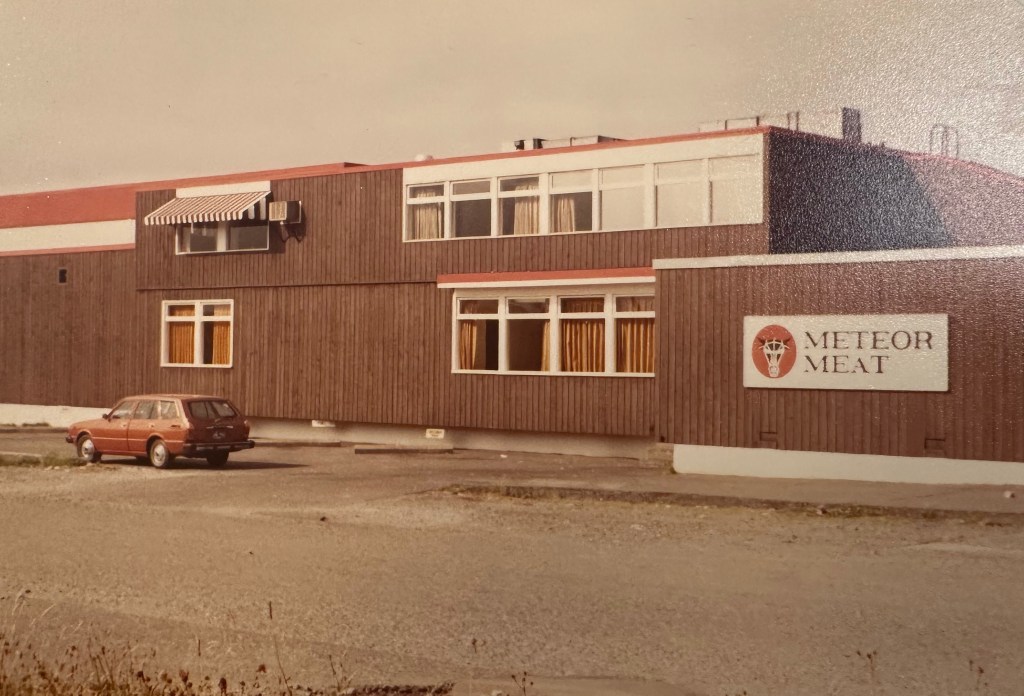
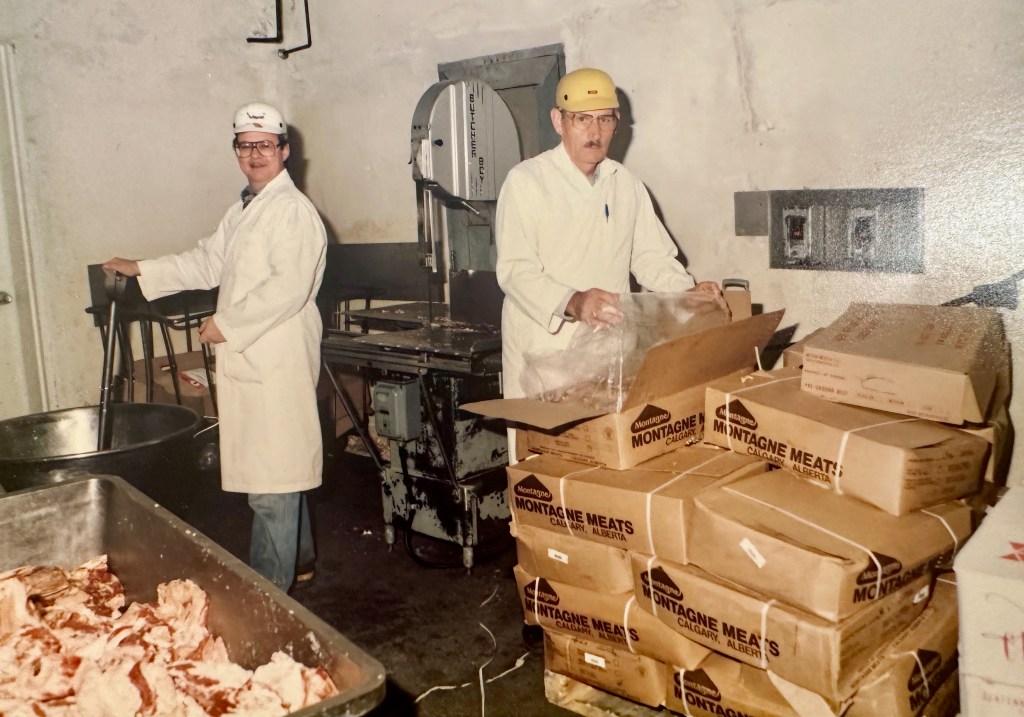
Horst began his career at Meteor Meat in fall 1966, a few months after arriving from Winnipeg, and continued working there until the plant closed during the recession of 1983, when he was laid off at age 59.
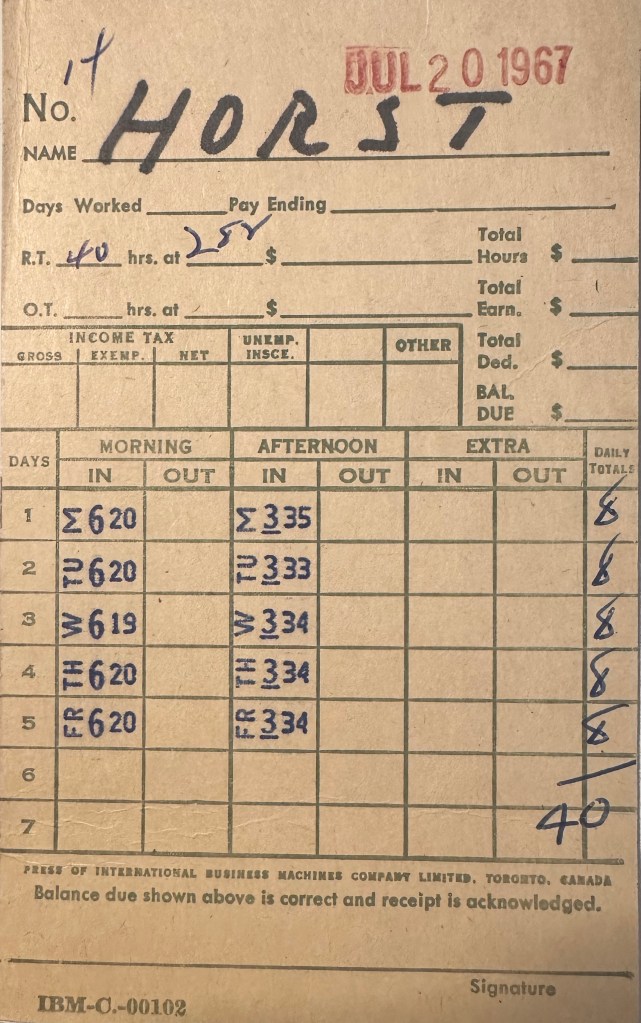
His paycard from July 1967 shows that he clocked in ten minutes early every day, and clocked out 3-5 minutes longer for a full eight hours. It also shows he was making $2.82 per hour.
Horst worked extra (overtime) on weekends, going in for a few hours to move the frozen meat between freezers. The photo above was one of those days, as his car is the only car in the lot. I would sometimes come along to “help” move the huge palettes of frozen meat; some of these freezers were -30 degrees.
Horst worked for a few years on the night shift, as the pay was marginally better. This meant he started work at 9:30 pm, and worked through to 6:30 am. But instead of coming home and sleeping eight hours – from 7 until 3 pm in the afternoon – he would only sleep until 11 am, and then work around the house. He did nap a few hours before started work in the evening.
I have a clear memory of being 14 years old, during summer vacation, and having to help my father put up new sliding on the entire house. We started at 11 am every day, and it actually made an impression on teenage me when I realised that my father had worked a full night shift, and then only slept four hours, before putting in another half day’s work on the house. I think from that time forward I recognised the value of hard work, I tried in some way to emulate what my father had done.
There was a Canada-wide recession in 1983; interest rates shot up to 17%, and many homeowners lost their homes at this time because they could not afford the new mortgage payments. Oma and Opa, being extremely frugal their whole lives, were not in danger; however, Meteor Meat closed down, and Horst was out of a job at age 59.
Because it was a recession, it was almost impossible to find work, especially for a man in his late 50s. I remember Opa told me that he had applied for a job at a fast-food restaurant and had to stand in line with a bunch of twenty-year olds.
A friend of mine’s parents knew of a dental mechanic – someone who made crowns for dentists – who worked at home and needed a driver to deliver the finished products around town. Opa took this job, as it was low-pressure, and he did this until he retired in 1988 at age 65. Back then, BC had mandatory retirement at this age.
233 W. Keith
Horst and Elly had decided to purchase an entire duplex when they moved to Vancouver, with the plan that the rent from the upstairs suite would help pay for the mortgage. This was an example of their frugal ways (more on that later) that paid off – they were able to pay out the mortgage by 1980, three years before the Canada-wide recession.
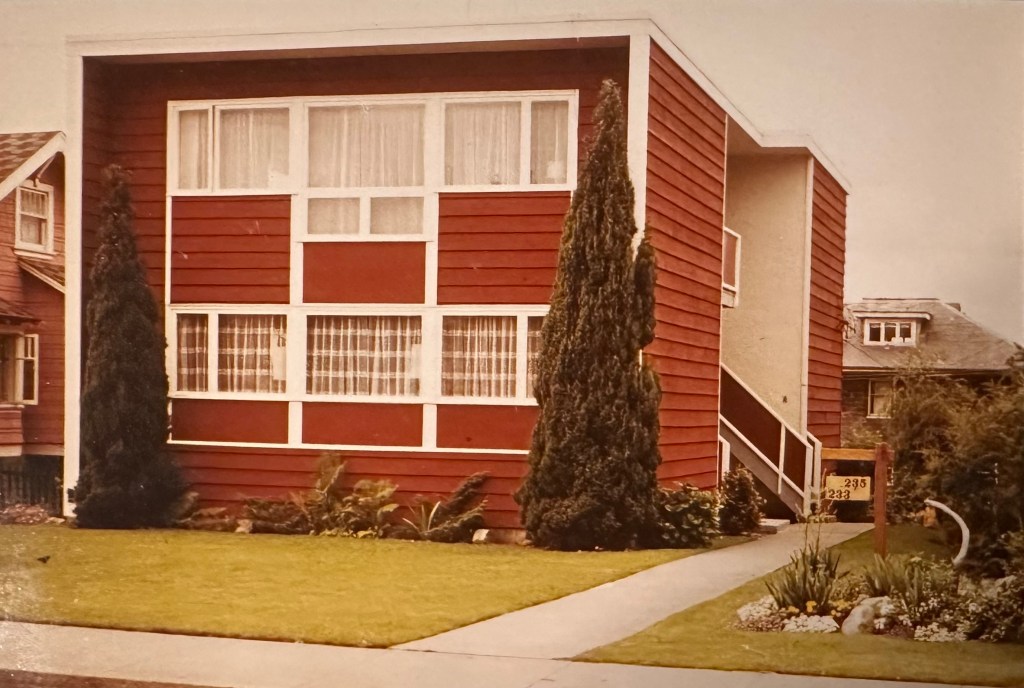
The house was built in the early 1950s, at a time when housing design was changing, and some curious experiments were evident in this house. For example, the electrical heat came from the ceiling rather than the floor; as a result, floorboard heaters had to be installed because the floor was always cold. Also, up-and-down duplexes are extremely rare, as most are side-by-side making them virtually identical to one another. Living in the upper duplex had a nicer view, but the trade-off was a smaller basement.
Keith Road, the equivalent of 7th street in North Vancouver, was the upper part of a wartime and postwar time development in lower Lonsdale that was meant to house the shipworkers employed at Wallace Shipyards. The shipyards remained active until the 1980s, and the area did have a “port” atmosphere, which included some questionable bars in the blocks closest to the water (i.e. 1st and 2nd streets, where I now live). When we moved into the area in the late 1960s, the area was almost completely small single family homes; our duplex was unusual on our block and in the neighbourhood.
After living on Oak Street in Vancouver, where there were next to no children, a desirable aspect of the Keith Road house was that it was across from an elementary school; the thought that the area would be teaming with children. However, the neighbourhood was populated mainly by older couples; of the sixteen houses on our block, maybe five of them had children living in them. I assume now that many of those people purchased the homes in the 40s and 50s, had their children, and remained living there without their kids. In the 1960s, when young families were looking for houses, lower Lonsdale was off their radar because a) it was too close to the industrial shipyards, and b) they wanted to move into newer neighborhoods further up the mountain or in Lynn Valley.
During the early 1970s, many of these thirty-year old homes in lower Lonsdale were torn down and replaced by apartment buildings meant as affordable rentals. As a result, the people who eventually lived in the area, and whose children attended Queen Mary Elementary, were often lower income, immigrants, or single parent families.
In my Grade Seven class, I remember I had friends whose parents were from Czechoslovakia, Russia, Italy, Hong Kong, India, England, and the Caribbean. And of the 30 kids in every grade, at least five or six were First Nations, from the nearby Squamish Indian Reservation.
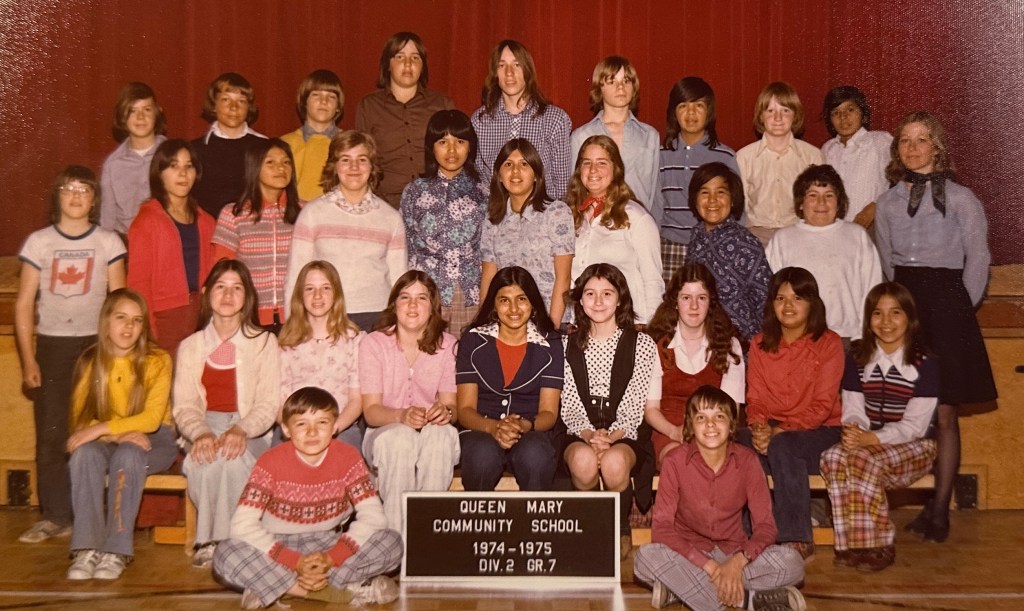
Although I spent a great deal of time playing at the school by myself – kicking a soccer ball for hours against the wall to learn to kick with both feet, throwing a baseball against the same wall and catching it, practicing tennis against a wall – being an introvert, extremely shy, and an only child, I had difficulty making friends. So weekends and summer vacations were spent with family rather than hanging out with school friends.
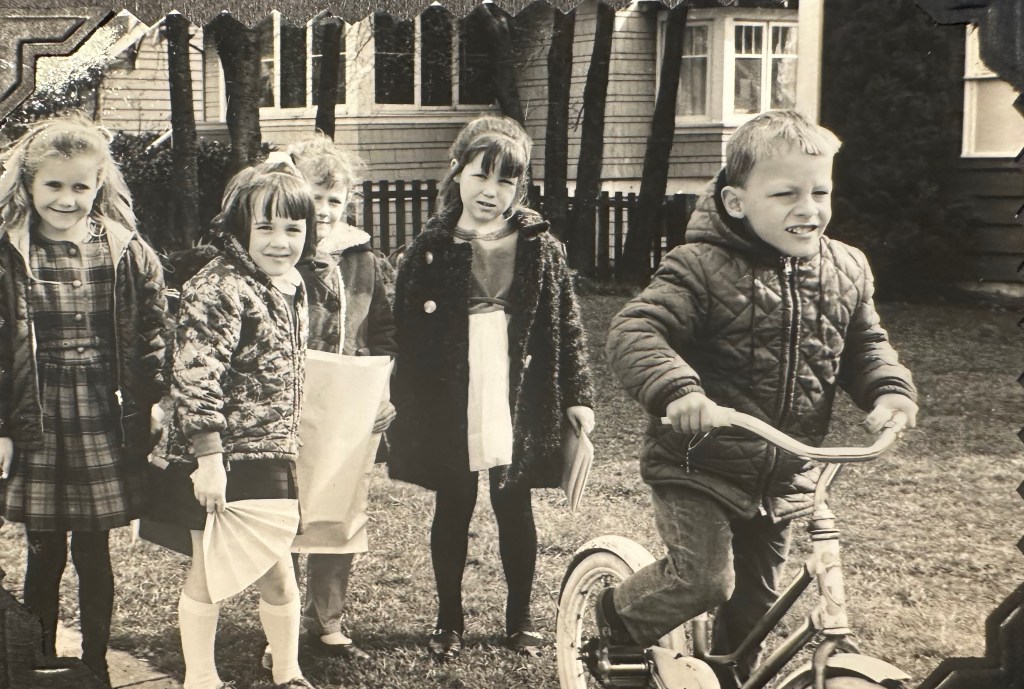
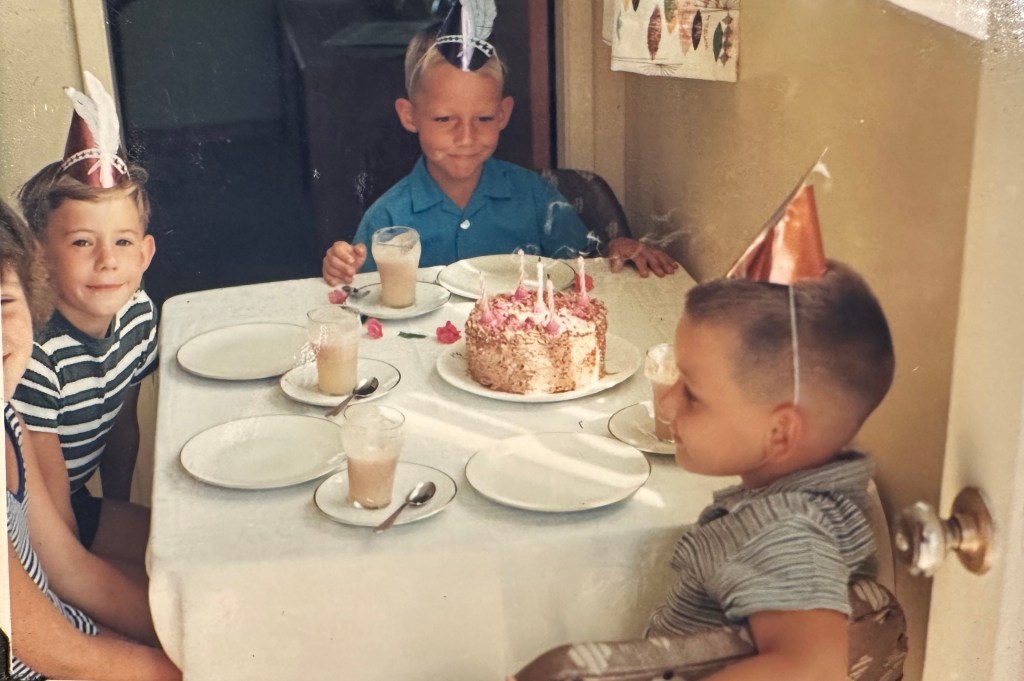
Birthday parties were not a big deal back then, particularly for me since my birthday was in the summer. I think I went to two birthday parties as a kid.
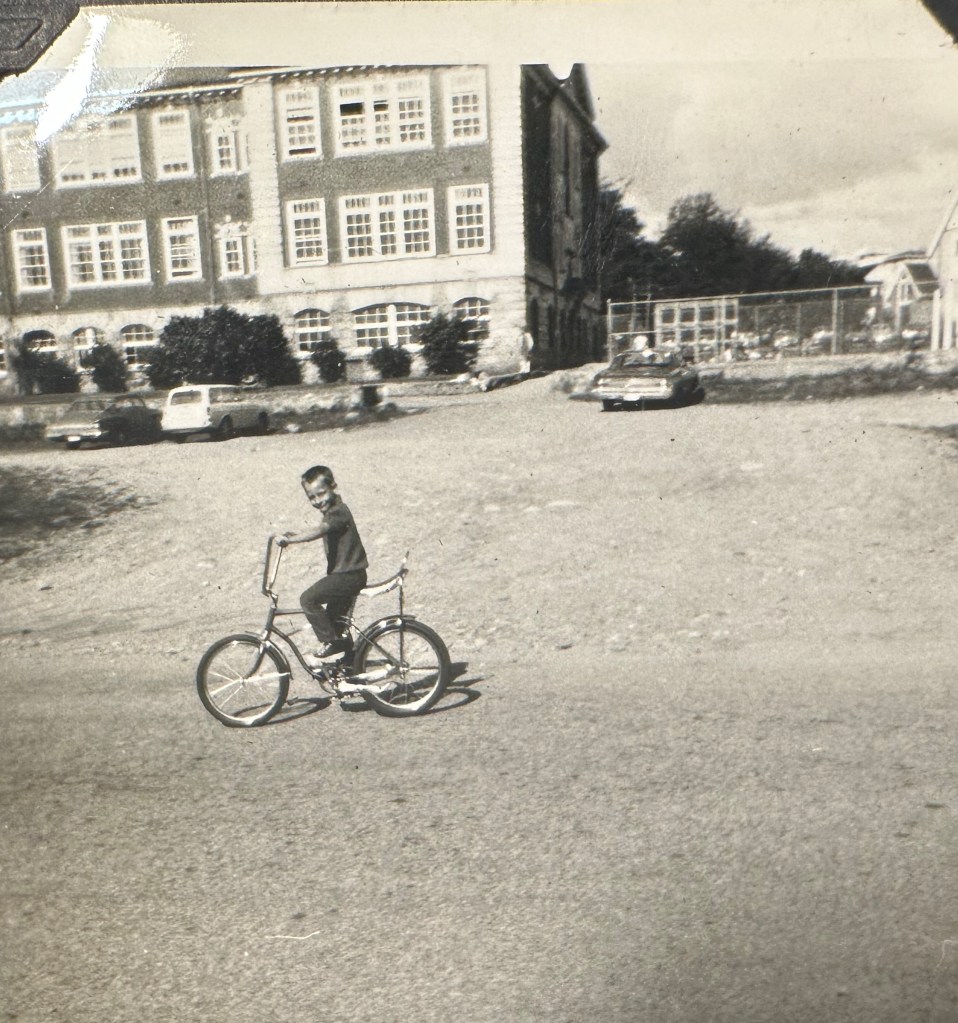
I did get a very cool bike for my eighth birthday: a blue Mustang with monkey-bar handles and a sparkly banana seat. Although we were a single-income family, with my father working as a meat-packer, I never felt deprived of material possessions – the bicycle was as good as any kid’s bike in the neighborhood.
That said, when I was eight, the boy upstairs got a hockey stick for his birthday. That in itself was a bit unusual, as this was a time before cheaper imported goods were available, so it would have been a high-quality item made for kids playing seriously, and thus expensive. We showed it to my father, who then traced it out on a sheet of plywood, and cut out my own “hockey stick”. It was slightly wider than the original, so we deemed it a goalie stick, and I became the designated goalie at street hockey games at school. No one seemed to question that I was using a home-made hockey stick.
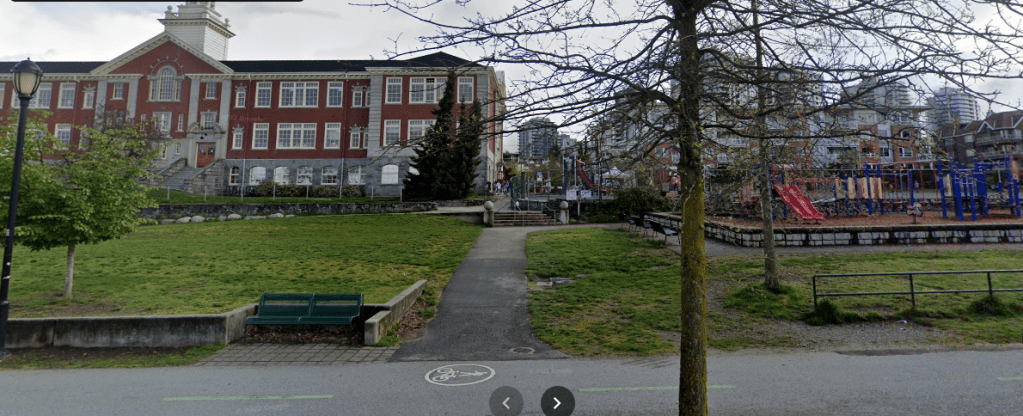
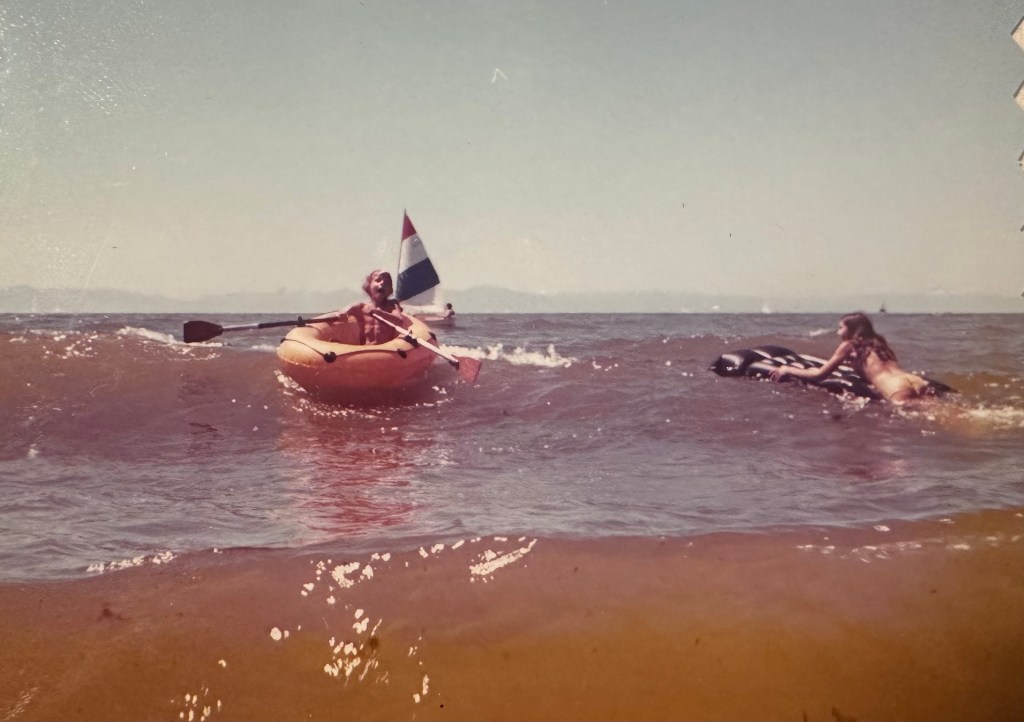
Much of my time was spent alone; I would sum up my childhood as quite lonely. When we went places, like the beach, I had to keep myself amused, as I was too shy to play with other kids.
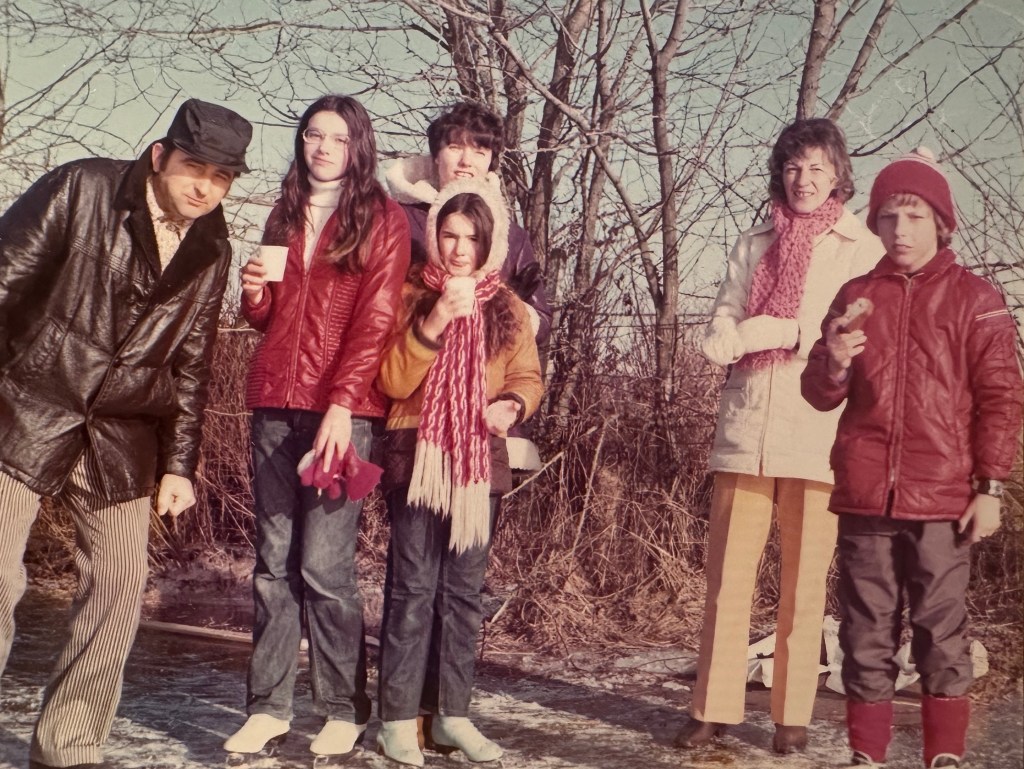
Oma and Opa made efforts to find family friends with children. One such family, the Kozors, had been friends of my parents back in Winnipeg, and followed us out to Vancouver about three years after we moved here. They had two girls, one a few years older than me, Susan, and one a year younger, Kathy. I had a tremendous crush on Kathy growing up. The Kozors lived in Delta, and we would see them about once a month.
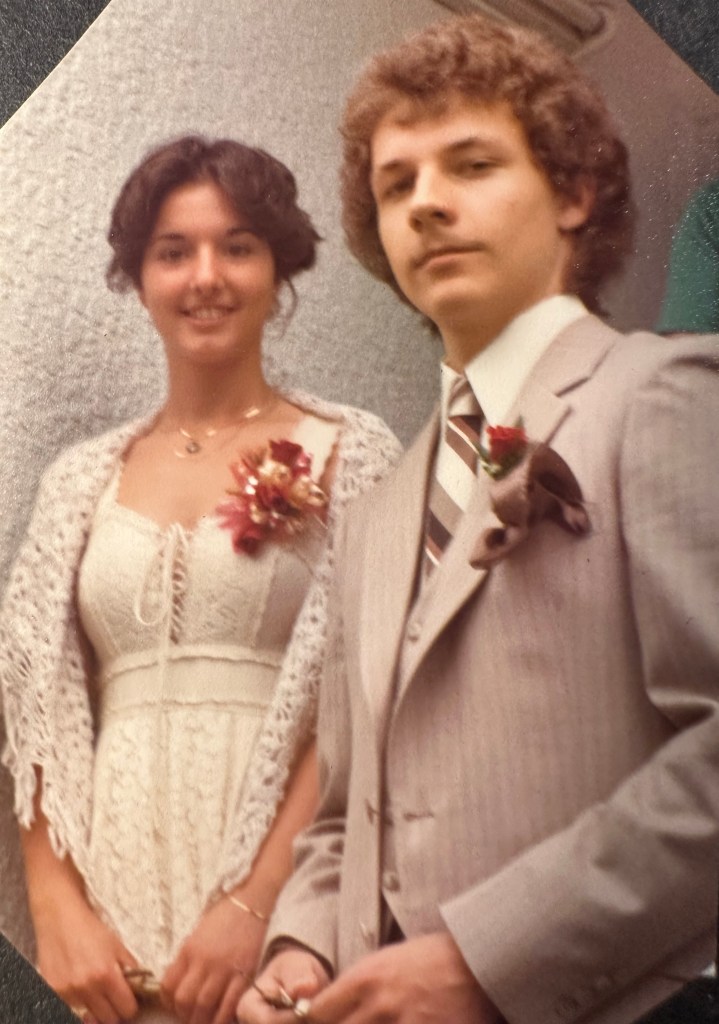
I went to my Grade 12 graduation with Kathy Kozor, which caused quite a stir amongst my friends.
Elly the tailor
Elly stayed at home to look after me until I began high school in 1975. Each school day, I would come home to have a hot lunch; maybe that’s why I didn’t have many friends at school.
As a trained tailor, she made a lot of my clothes until I was twelve.
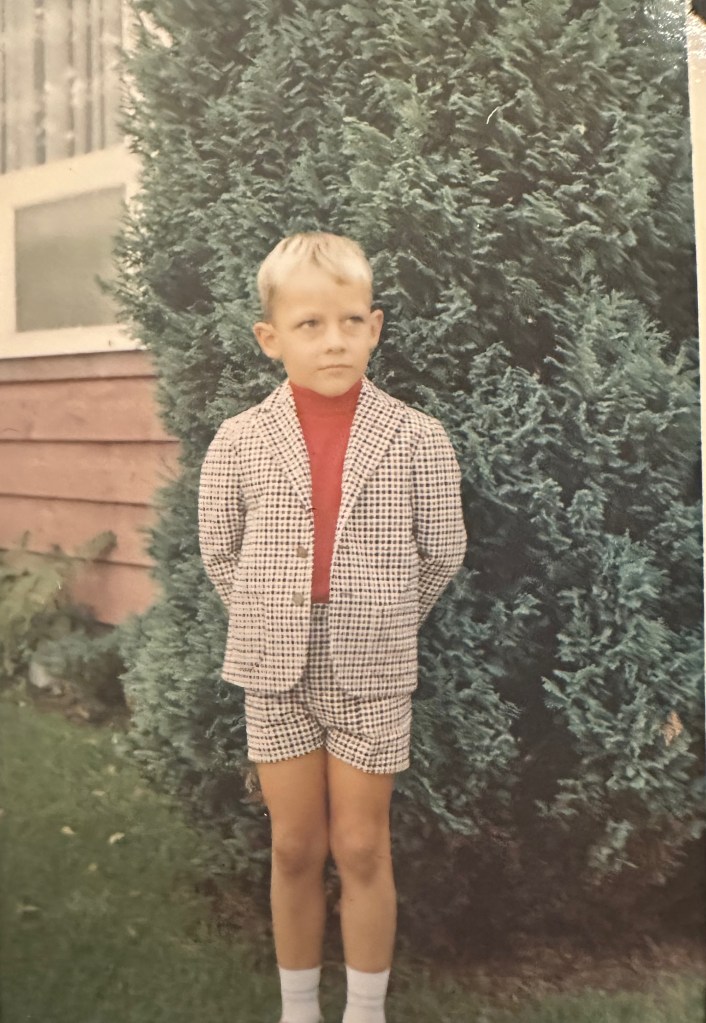
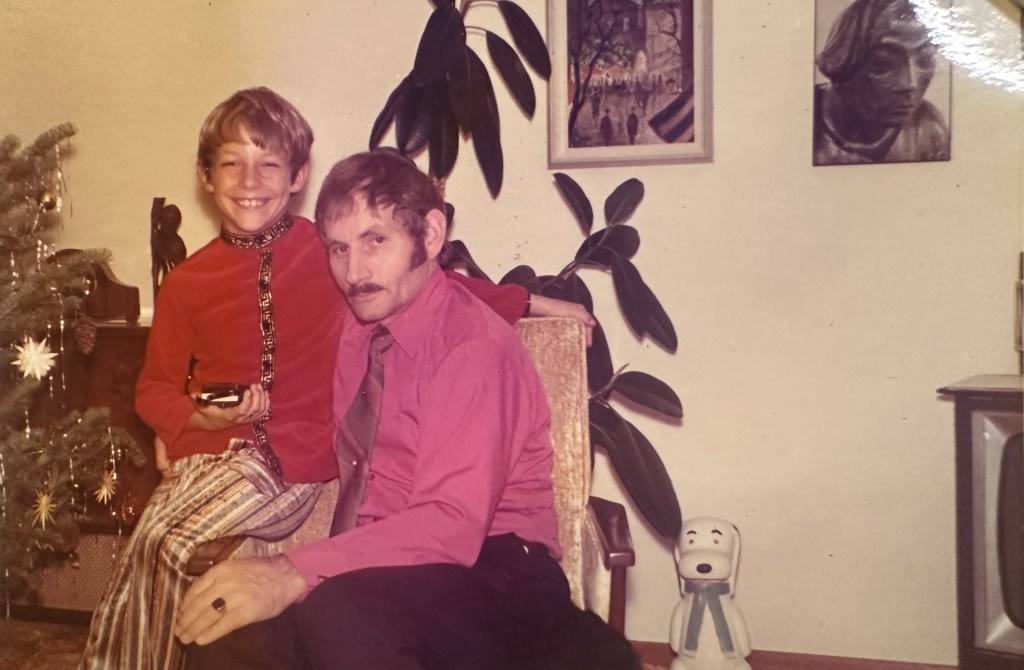
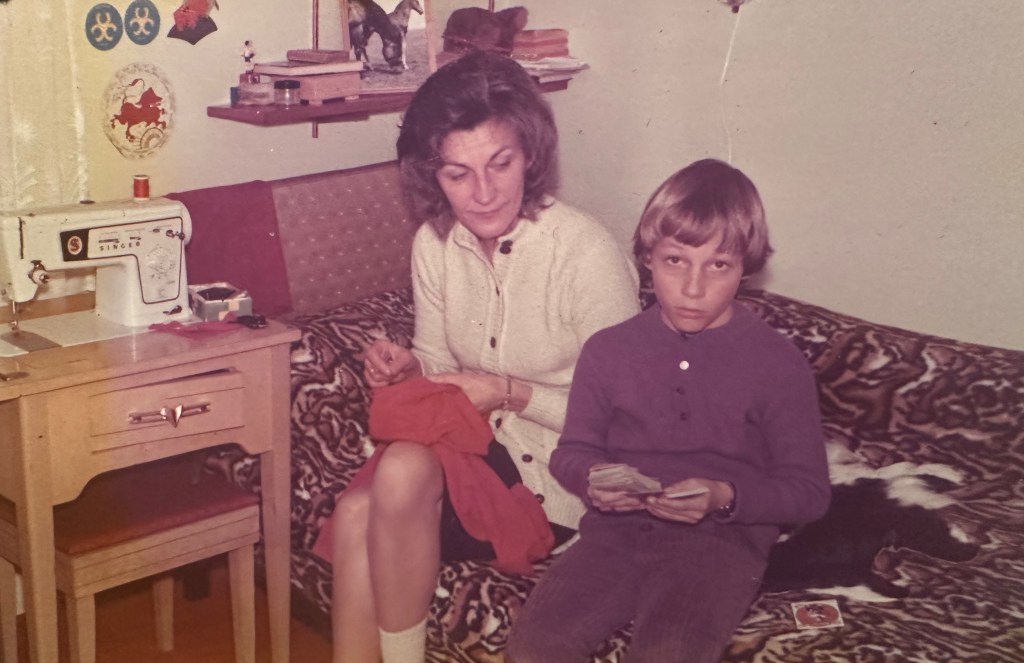
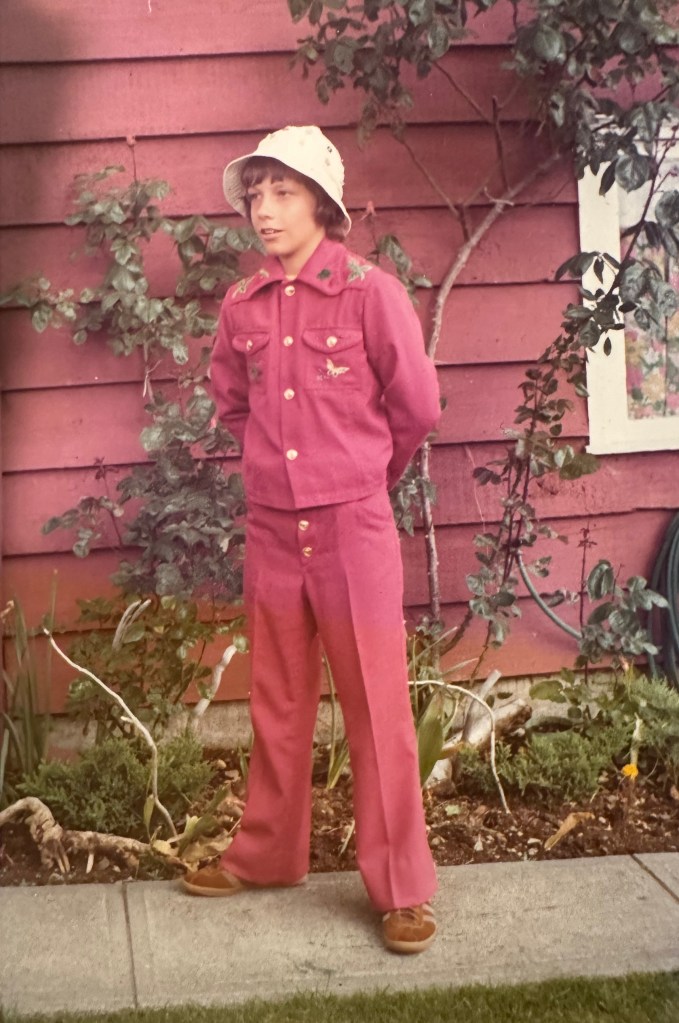
I remember the first pair of jeans that I owned were purchased when I was eleven, for use in baseball practice (!).
Interestingly, I was never teased about my clothes while I was in elementary school. Oma had impressed upon me the desire to be different and independent, a “non-conformist”. A fortune-cookie printout was on my wall for many years: “Strive to be different”. The late 60s and 70s were a time of non-conformity, so my unique clothes were more easily accepted. I remember in grade seven going to school in canary yellow pants, and the class tough-guy said to me: “cool, yellow pants!”. That all changed in high school, however.
Another trip to Germany – 1968
Oma and I returned to Germany in the summer of 1968 when I was six, once again staying mainly in Bünde, where Oma’s sister, Charlotte, and mother, Koyus, lived, as well as Opa’s sister Ula and her family.
Gerda, Charlotte’s daughter, visited from Stuttgart, and brought her two sons, Tilman and Konrad.
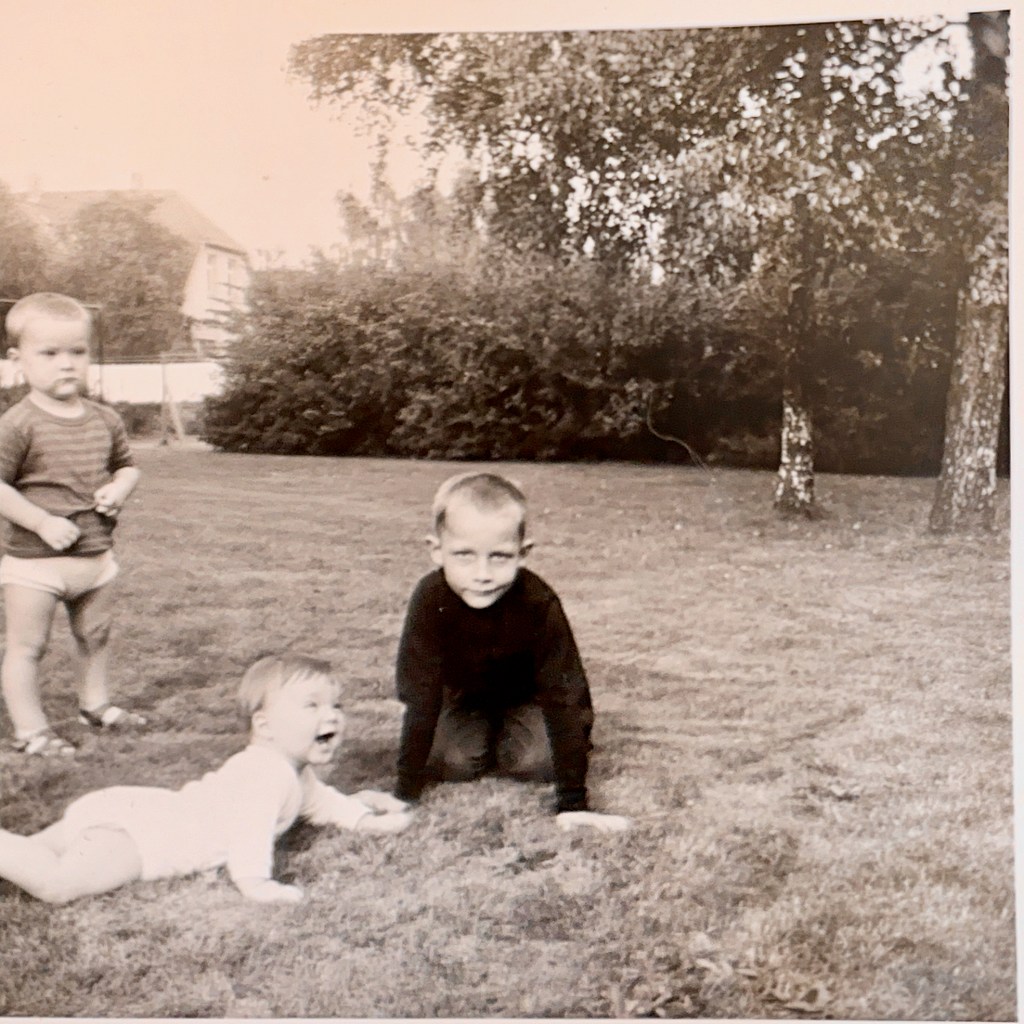
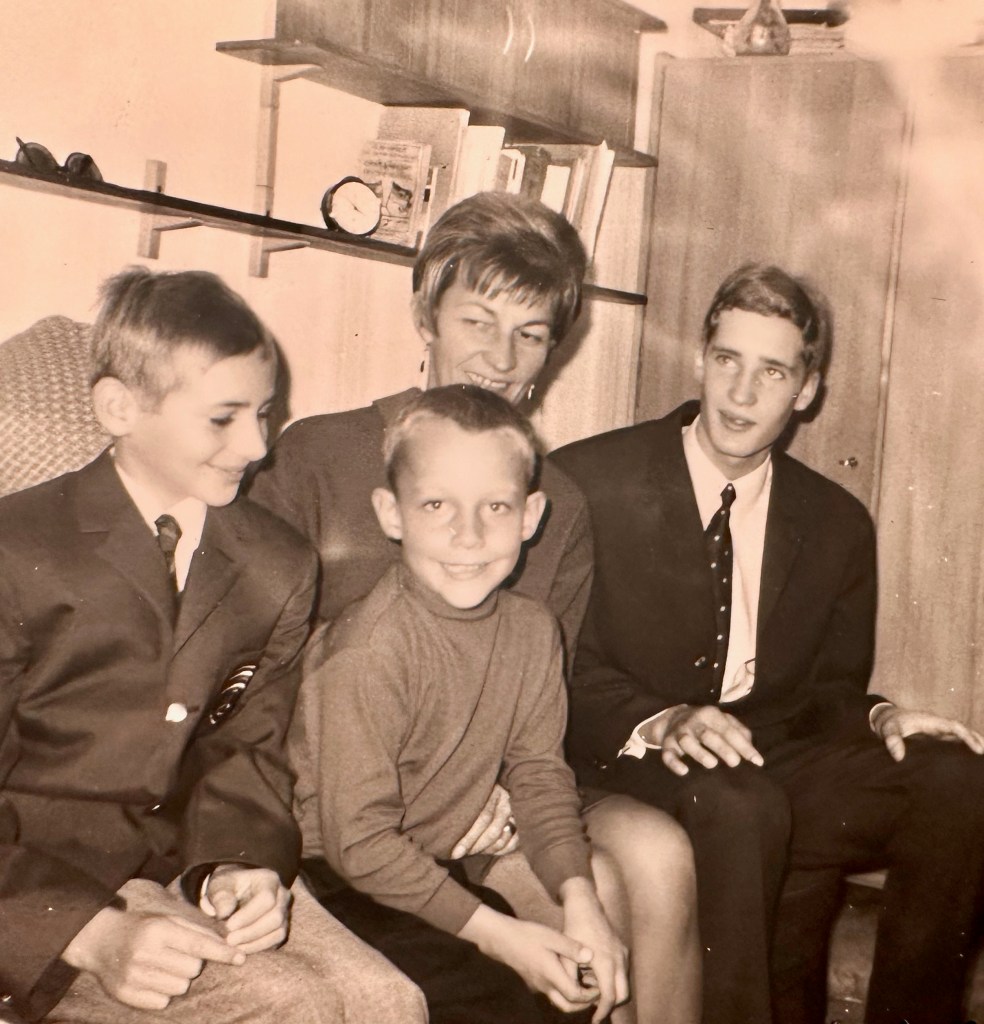
For some reason, Oma decided that it would not be a big deal for me to miss the first two weeks of grade one.
My first day of school was memorable. When the recess bell rang, everyone streamed outside. Naturally, I had no idea what was going on, but I followed the crowd – playtime outside! After ten minutes, the bell rang again, and it took me a while to realise everyone was going back in. The school had boys from grade seven that were deemed “recess monitors”, whose job it was to herd the lower grades back into the school; the monitor began shouting “who’s gonna be last so I can pound ’em?”. I was terrified, and ran home. My mother had decided that morning to go shopping on Lonsdale, so wasn’t home, which only made me even more upset. I went to the upstairs duplex, rang the bell, and simply cried until my mother came home from shopping.
Another wonderful memory of grade one: the desks were divided into rows, with the “smart” row at the left (closest the teacher’s desk) and the “dumb” row at the right. The supposed incentive was for students to continually try to get closer to the teacher by improving their grades with each test and quiz. Since I missed the initial placement test, I was placed at the end of the third row, just above the “dumb” row; I don’t remember getting more than one row further ahead.
(At this point, I had originally written that I was a very average student until grade six, but I found all my report cards from elementary school, and it turns out the I was “above average” since grade three. Prior to that, my teachers wrote that I needed to learn to not be distracted by, or in turn not distract, other students. Huh.)
Finally, another memory of grade one: we had a student (from the dumb row) who had behavioral issues. At the time, corporeal punishment was allowed, and I remember the teacher taking the child (six years old at the time) into the cloakroom, with a ruler, then the kid coming out crying and the teacher coming out with a broken ruler. Huh.
Search for a name
Unfortunately for me, a popular TV show from 1965 to 1971 (and later syndicated) Green Acres featured a pig called Arnold Ziffel.

Back then, it was common for children to tease one another (although for some reason, not about how one was dressed), and I was called “Arnold the pig” during elementary school; as an introverted only child, I was not used to this and very hurt. I encouraged friends in elementary school to call me “Butch” (no idea why); by high school, I was called Arnie, and used that name throughout high school.
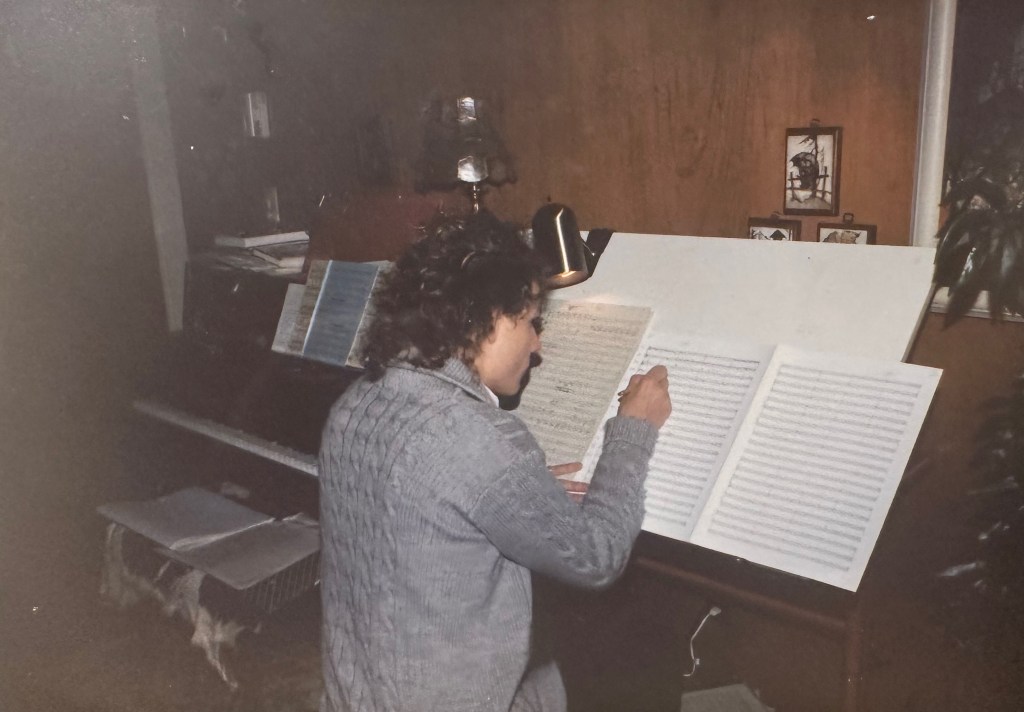
When I began college and began to study composition, my professor told me that “Arnie” was not a good name for a composer. I refused to use Arnold, and for a while signed my compositions as R.A. Eigenfeldt.
In 1983, after completing two years at Vancouver Community College, I began studies at UBC, and used the name Ralph for one year. However, everyone continued to call me Arnie, which was confusing for my professors. Oma took me to see a numerologist, and, based on the numbers of my birthday, he said I should change my name to Reagan. Um, no.
In 1985, I wrote music for a film, and the director, who was European, had not seen my name written down. He credited me as “Arne” Eigenfeldt, which I thought was an excellent way to retain my name while giving up the more colloquial “Arnie”. I formally changed my name when I was 22.
Family cars
Cars have always been a North American luxury item that Horst and Elly’s family in Germany didn’t experience until at least the 1970s. Horst was always immensely proud of his car.
Their first car was purchased in 1956, two years after arriving in Canada: a 1953 Mercury Monterey.
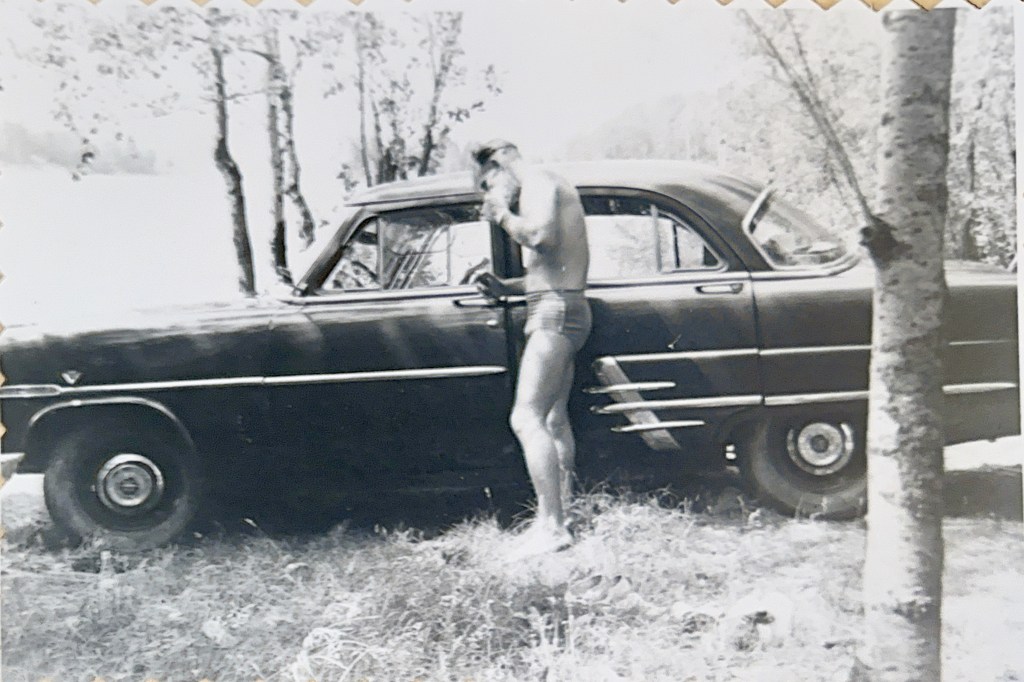
Horst had bought a new Ford Falcon in 1960 when both he and Elly were working full-time.
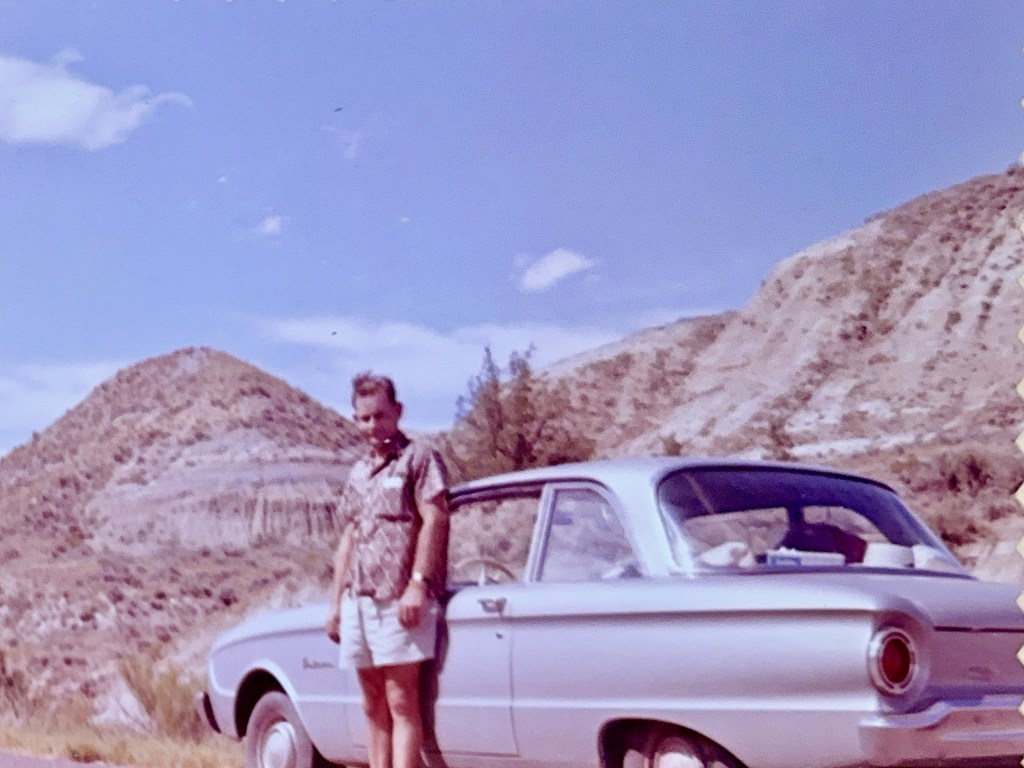
Opa’s next car was a 1965 AMC Rambler Classic 770, considered a “Sensible Spectacular” car. I’m guessing that they purchased this in 1966 for Opa’s drive across Canada to Vancouver. There are photos of the Falcon in 1965, including the summer trip to BC, then the Rambler appears in Vancouver photos.
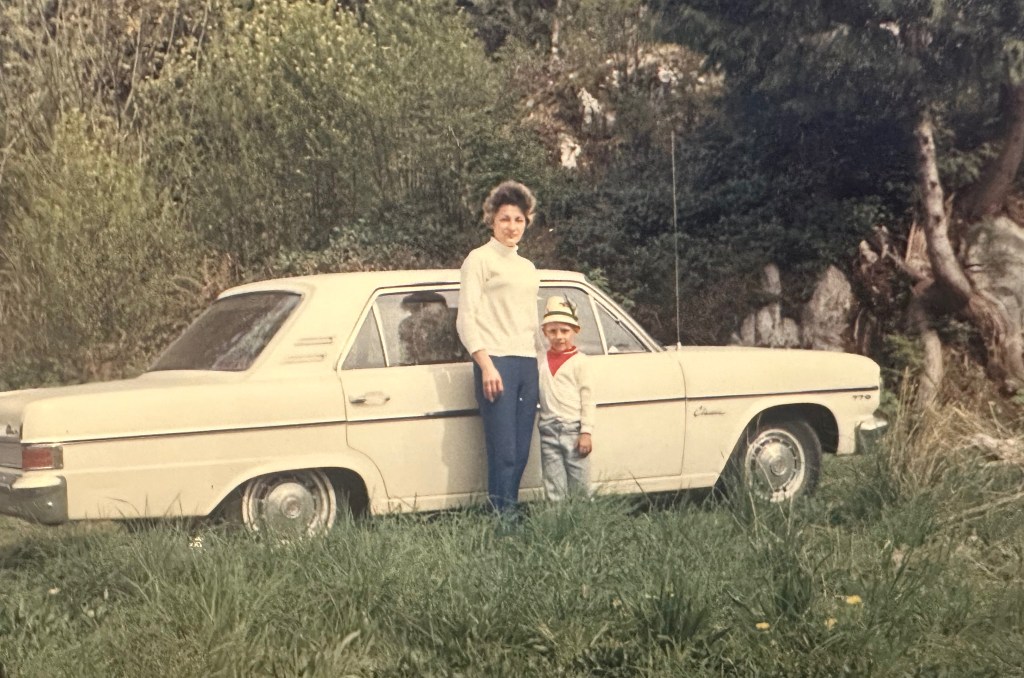
In 1971, Elly was driving with me to get new soccer boots and was involved in a crash at 15th and Chesterfield in North Vancouver, totalling the Rambler. I received a concussion when I hit the windshield (seatbelts were not wore back then).
Horst replaced the sensible Rambler with a sporty Chevrolet Chevy II Super Sport. Not exactly a family car, as it was only a two-door coupe, but it had a powerful engine that could almost be considered a muscle-car.
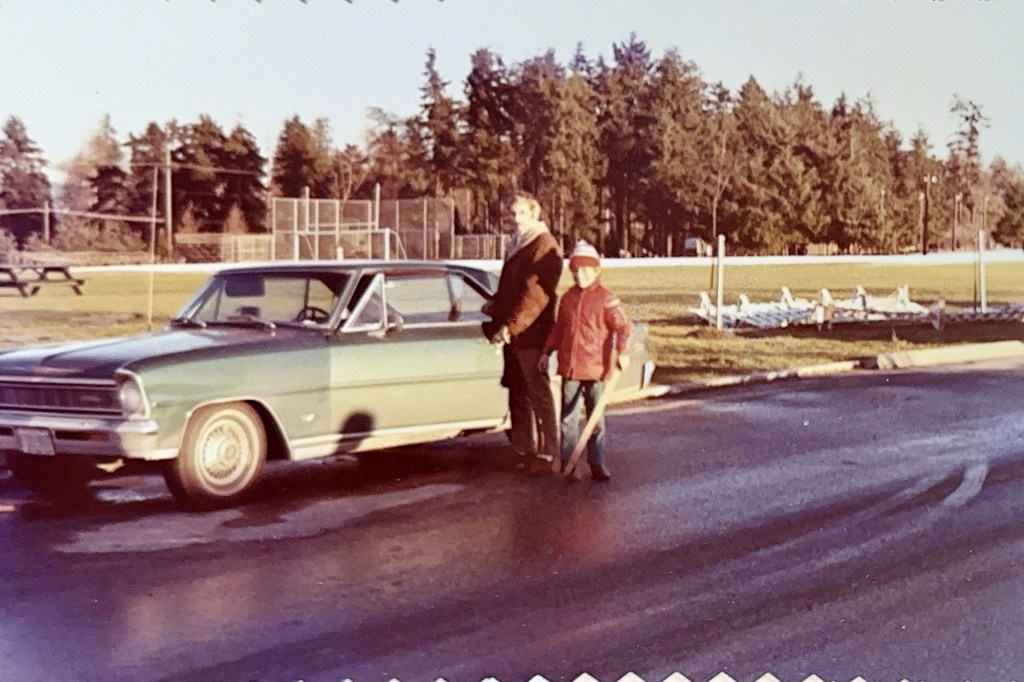
The Chevy II was a horrible car. Whenever we went on family vacations, it broke down. It did so on the way to Yellowstone Park in the summer of 1975, and on our trip through the Olympic Peninsula in 1976. On that latter trip, I remember riding along in the tow truck as it towed the Chevy II to a garage on Whidbey Island, disrupting that trip.
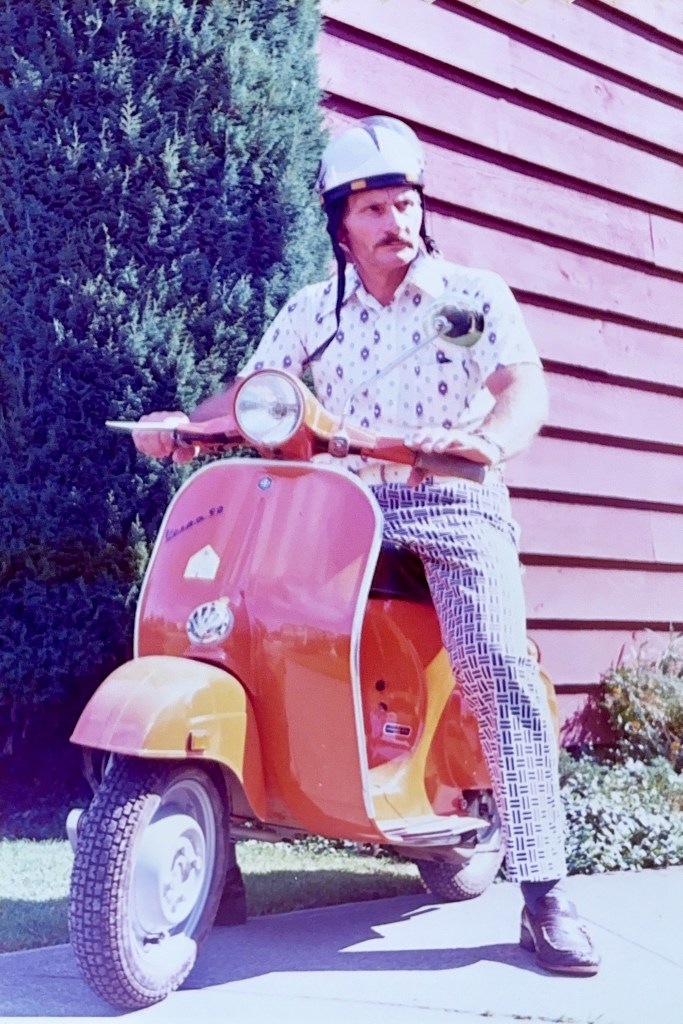
Oma began working in 1975 when I started high school, working as a tailor at a men’s store in Park Royal, Jack Fraser. She needed transportation to get there. Since Opa worked only one mile from home, he purchased a Vespa motor scooter for his short commute.
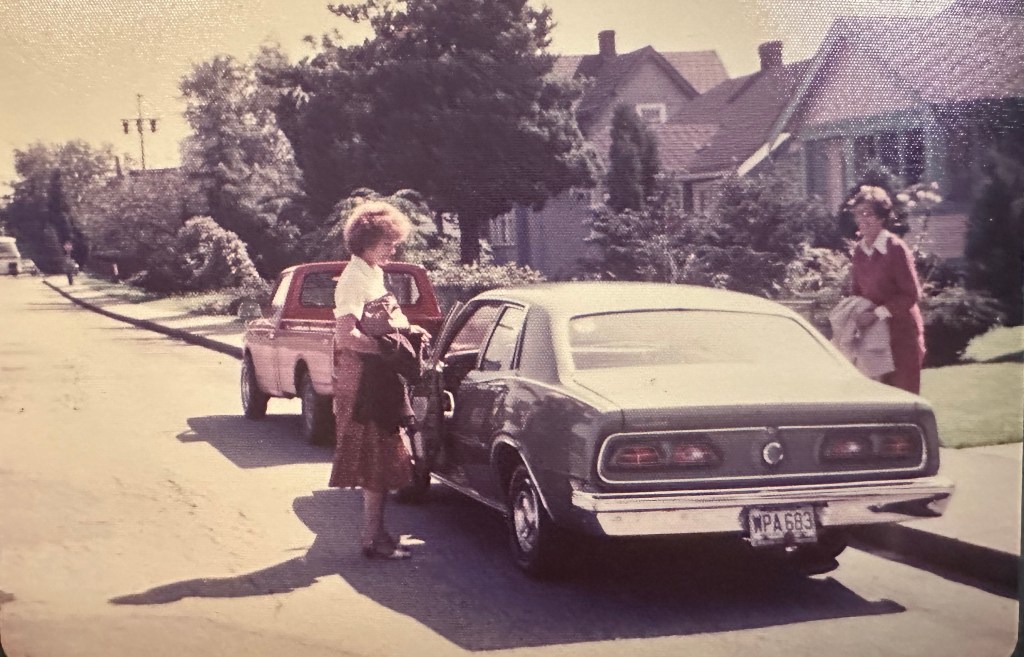
Because of the unreliability of the Chevy II, and Oma’s new need for a reliable automobile (plus, it was only a two-door), they traded it in for a more reasonable 1977 Mercury Comet sedan.
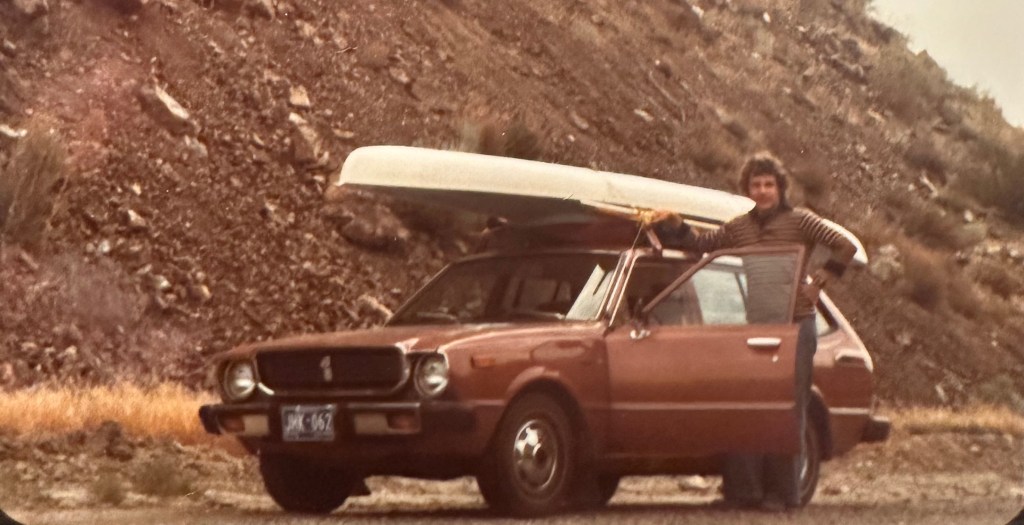
In the 1970s, there were limited Japanese cars available – the Honda was a young person’s car, not a family car, as were the Toyota Corollas. When I got my driver’s licence in 1979, Opa bought a second car, and found a Toyota Corolla wagon. This was convenient for him since it could carry garden supplies and skis, and great for me as well. Opa drove this chocolate brown car throughout the 1980s.
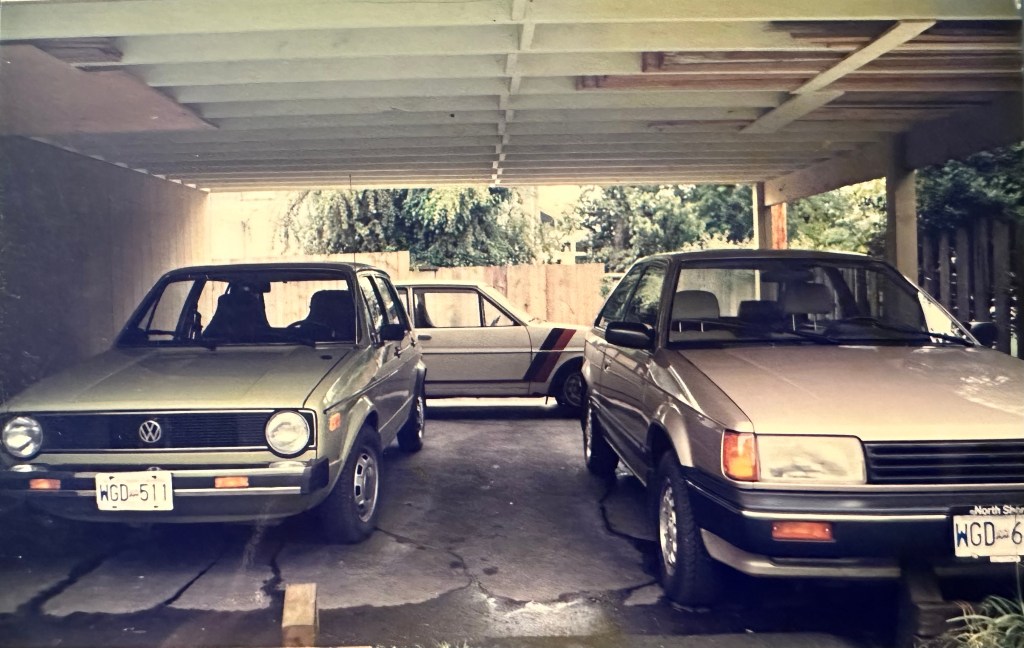
Oma eventually bought herself her dream car, a Volkswagen Rabbit. In 1988, Opa traded in the Toyota and bought a Mazda, which he drove until 2005.
Opa doing his thing
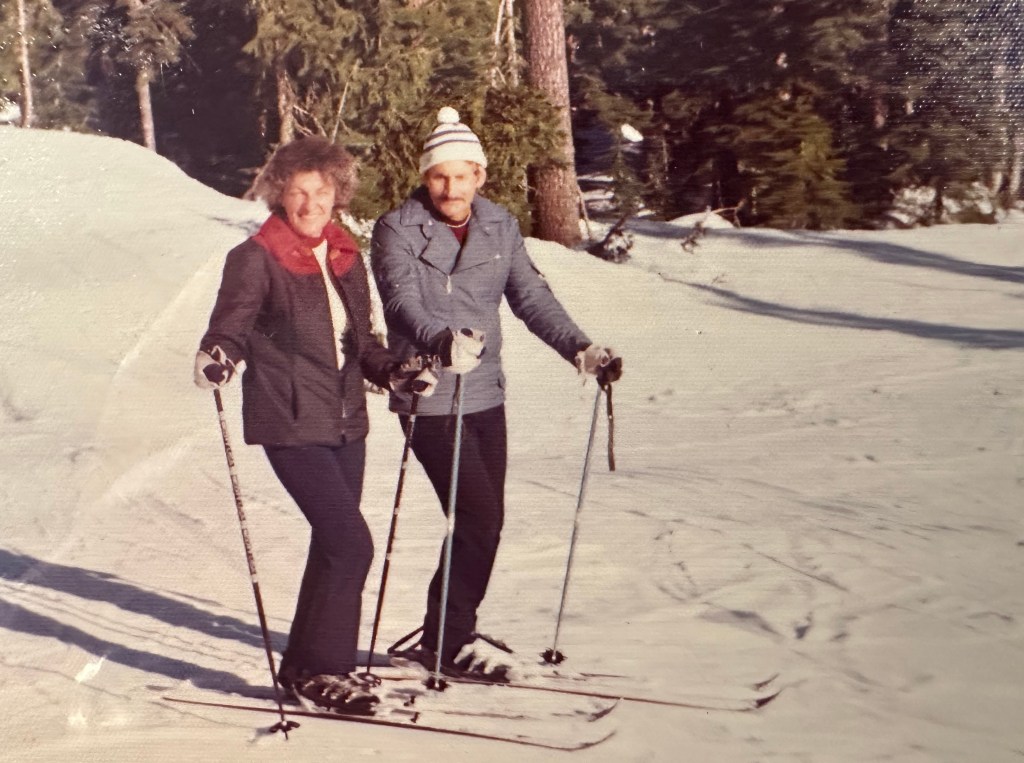
Opa was more adventurous than Oma, and more interested in trying new things. He rode a scooter to work. He began making his own beer in the mid-1980s before it became trendy decades later. We took up skiing as a family in 1973, and Opa continued skiing well into the 1980s.
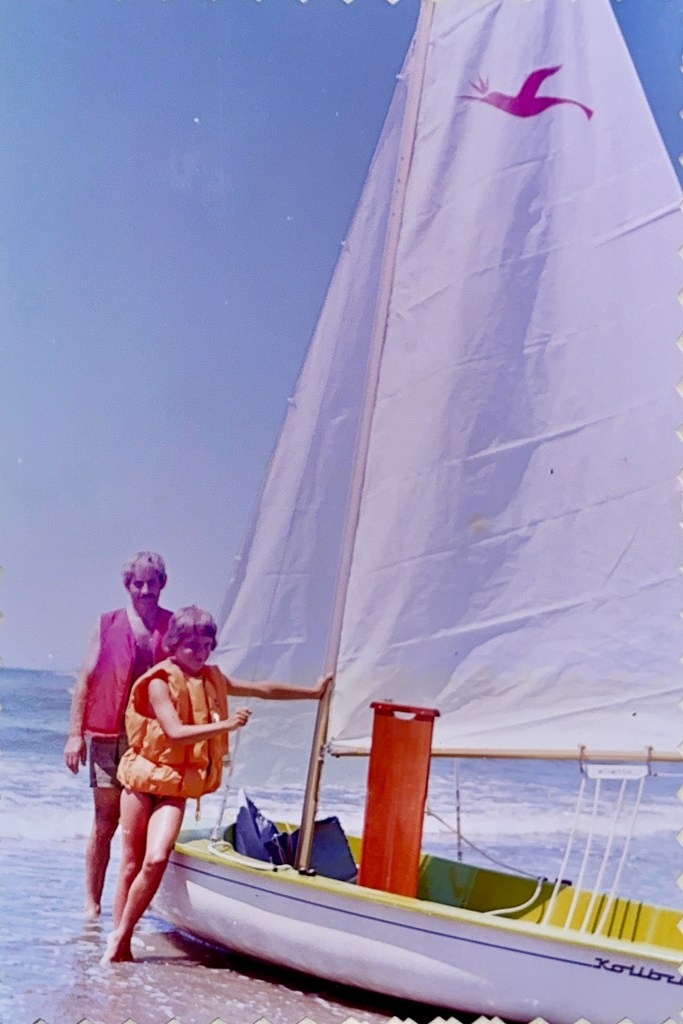
In the early 1970s, in his late 40s, he decided to take up sailing and purchased a small sailboat, a Kolibri. Oma never joined him on it, so it instead became a father and son activity; we spent quite a few summer days launching the boat at Ambleside in West Vancouver and sailing around the West Vancouver coastline.
When Opa turned 75, he had cataract surgery, not uncommon for people that age. The effect was to make colours much brighter. Opa then took up painting, and painted furiously for several years, filling up the basement’s walls.
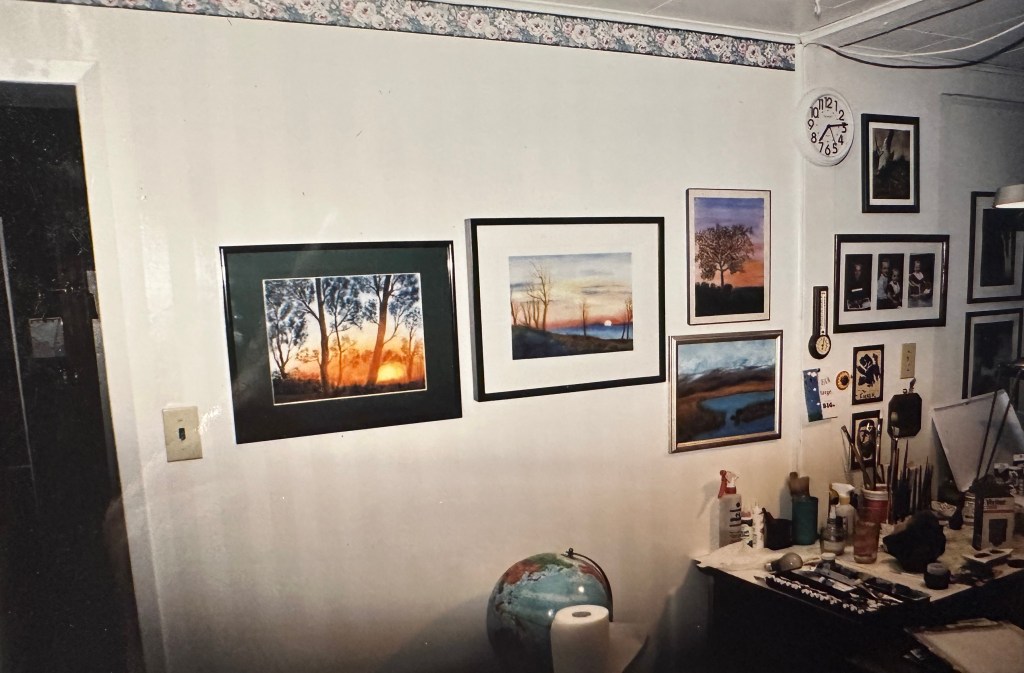
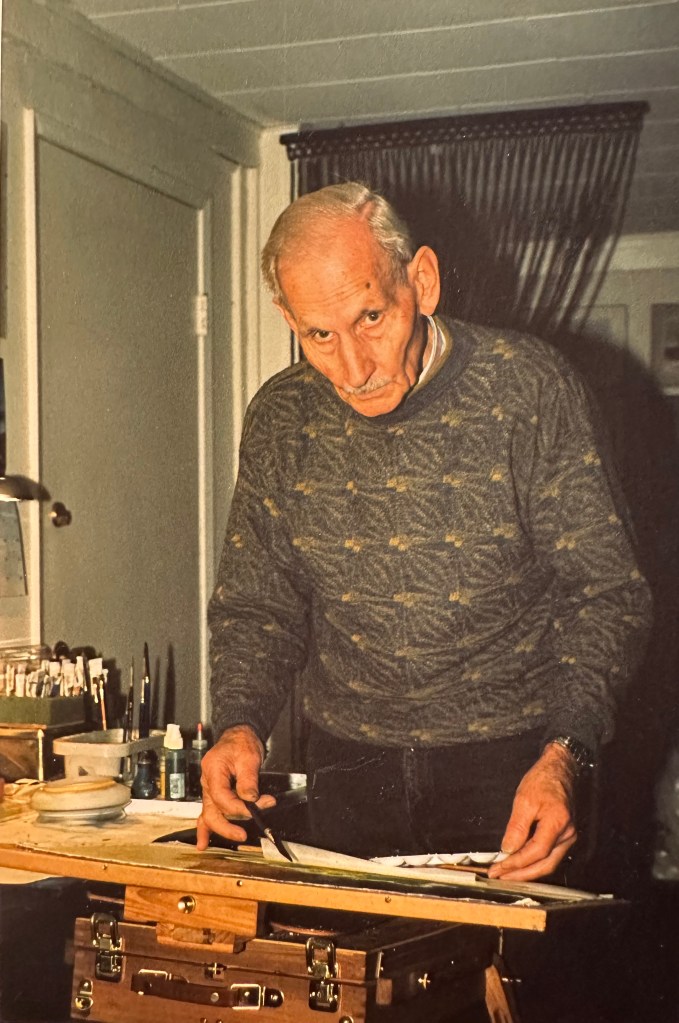
Gerda, an accomplished painter in her own right, came to visit us in 1998, and was very impressed with Opa’s painting.
Supporting their only child in sports
Oma had been an athlete in her youth, playing handball; she often spoke of how good she was at it. Of course, all of this would have stopped by the time she was 16 as the war changed everything.
I inherited Oma’s athletic ability, and began to play organised sports at a relatively early age for that time, nine. Such organised sports were quite rare at the time, apart from ice hockey; several schoolmates played hockey, but I wasn’t allowed to play because the practices were early in the morning before school, like 6 am. Oma felt that I wouldn’t do well in school if I was tired, and she was probably correct. When an ad for youth soccer teams appeared in the local newspaper, this was a godsend.
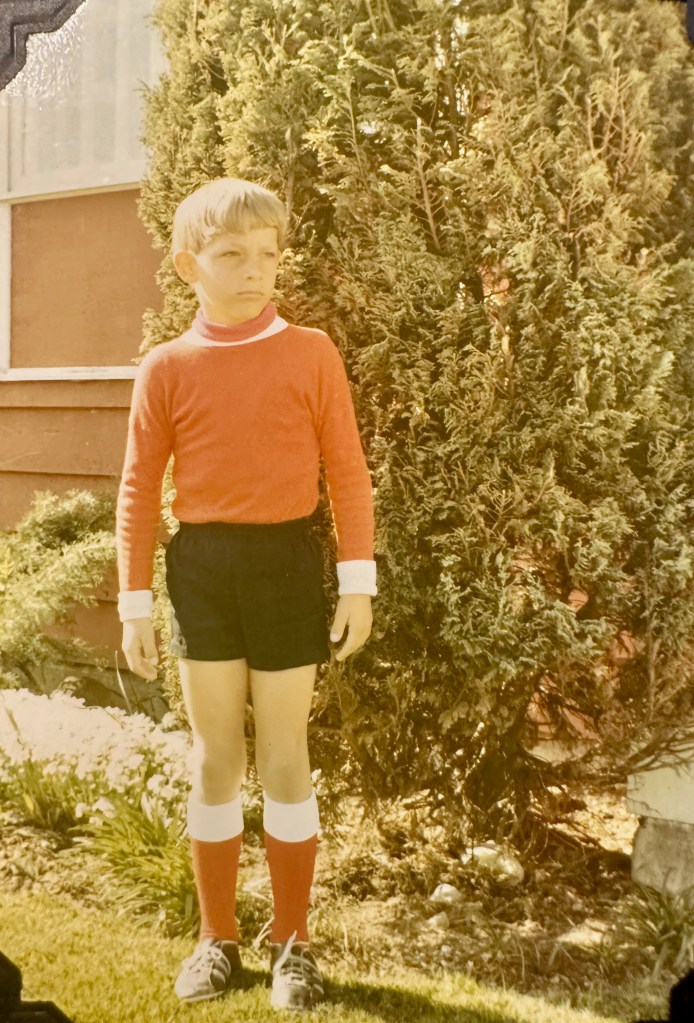
I played soccer from grade three through to grade eight. I had to quit soccer then because my knees had major problems. We had games every Saturday morning, and both Oma and Opa never missed a game, and always drove me to practice. This was unusual in our neighbourhood, as we regularly gave rides to teammates to games and practices; perhaps only 50% of the parents attended games.
Our team was somewhat below average, as our coaches knew next to nothing about coaching soccer. I remember one drill in the gym where we would be in two opposing lines, sitting down, and each given a number. When our number was called, we had to jump up and attempt to kick the ball away that had been placed between us, before the opposing player; most times, we kicked at the same time and jarred out knees badly. This, I was told, would toughen us up.
Because I wasn’t the best player on the team, and didn’t do well in the “toughness” drills, I felt very average. However, when I was twelve and in grade seven, I was moved to goalkeeper, and excelled at that position. I remember our school’s janitor was a coach on another team, and he recognised me as the “great keeper on the T-birds”.
That same year, in the spring of grade four, I started to play baseball. Similarly, teams were coached not by parents, but interested adults. The coaches below were Dan (left) and Ernie (right), neither of which had kids on the team.
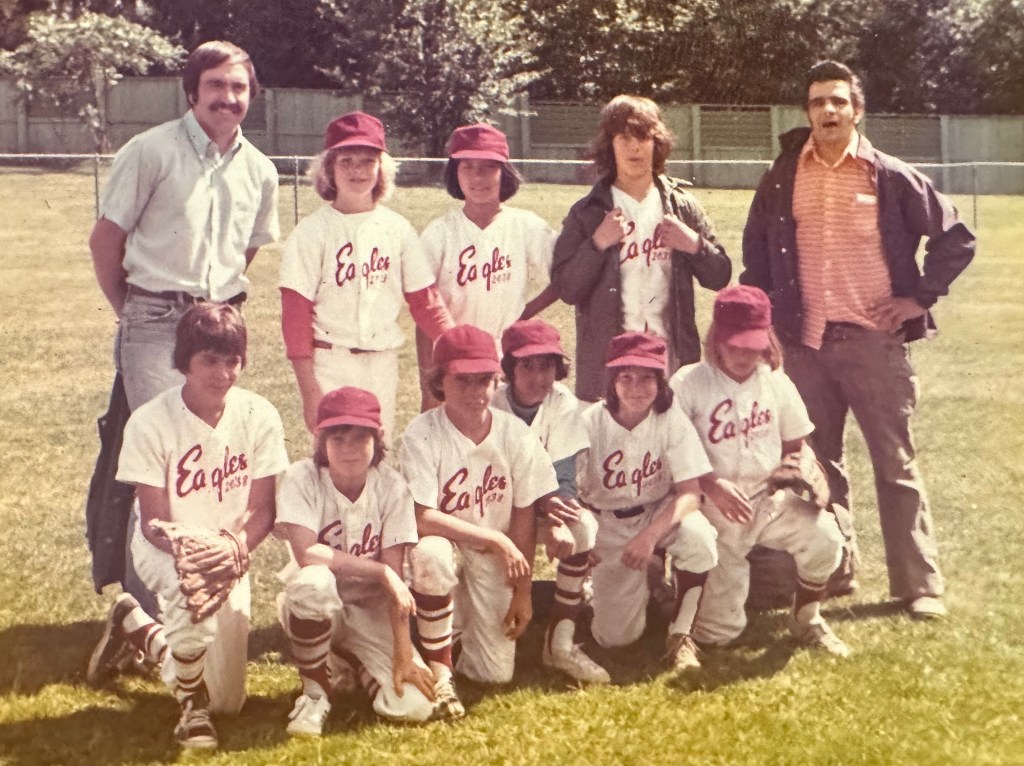
I was a better baseball player than soccer player. When I tried out for baseball at age 9, I was selected to play in the upper division (the Majors) rather than the lower (the Minors). I remember hearing a story about the draft at that time (coaches watched the tryouts, then met to select players. The best team at the time was coached by someone who actually had played semi-professional baseball: Dave Empy. He selected me, but then the organiser realised that a mistake was made, and it was another team’s selection instead; the manager of the Eagles, Ernie, had no notes on me, but decided to select me simply because Dave Empy wanted me.
The Eagles did have one of the best baseball players in the North Shore, named Brian Smith (the blonde kid standing in the photo above). At two years older, he was a role model, and I emulated everything he did, including his batting stance.
When I was eleven, I was selected to the “All-Stars” (yes, it was actually called that). I was also selected to this team when I was twelve; in both years, it was coached by Dave Empy, the aforementioned coach who tried to select me for his team when I was nine. The team won the District (North Van), but last in the InterDistrict series to Whalley. In that series, I hit my only home run of my career.
From the North Shore Citizen, July 27 1975: “Eigenfeldt, Jaycee’s most consistent hitter and versatile defensive player, slammed a three-run home run in the first inning to get the North Van crew rolling. Jaycee tied it in the bottom of the fourth on a great heads-up piece of base running by Eigenfeldt. He singled to start the rally, then scored when Vandyk reached first on an error. As the first baseman disputed the call (the umpire said he didn’t have complete possession of the throw from the shortstop), Eigenfeldt kept on running and made it 6-6”.
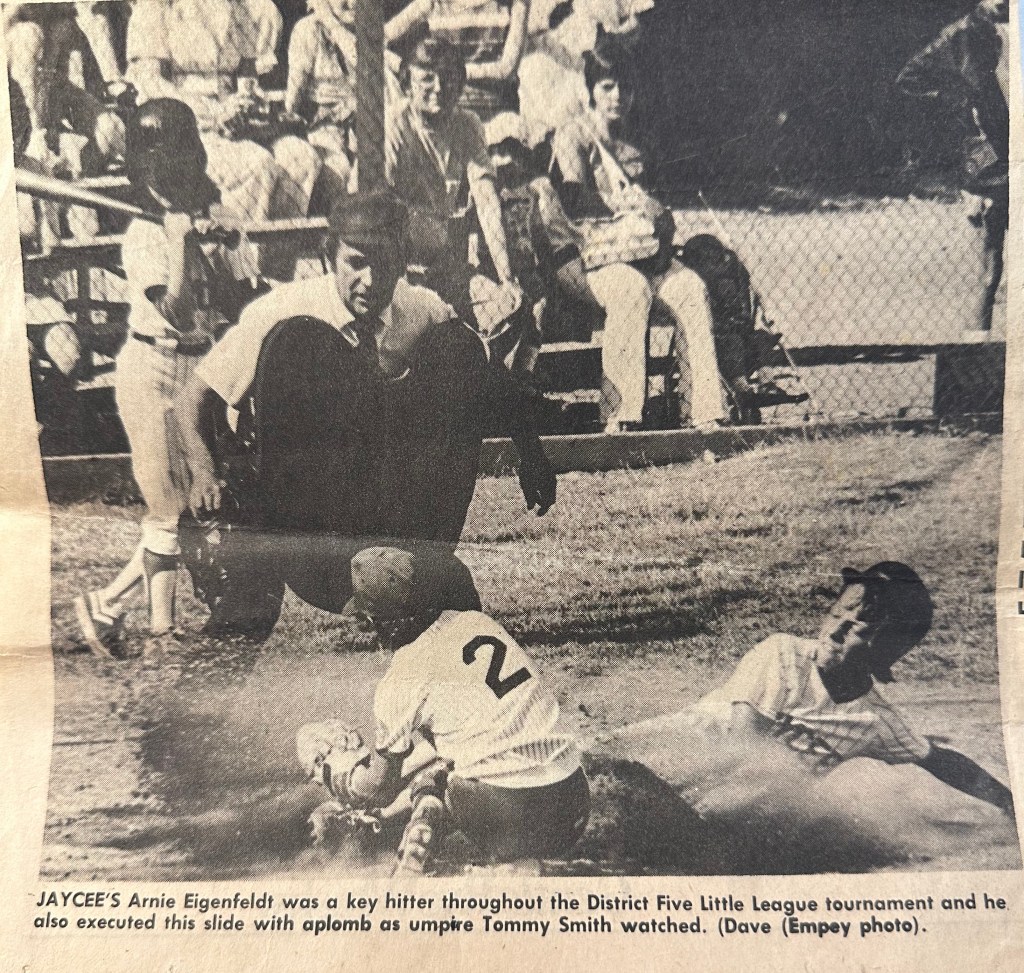
Oma and Opa came to every game.
Because there was no organised baseball beyond Little League and age 12, I did not continue playing as a teenager.
I had to give up sports of all kind when I was 14, including taking gym class after grade nine: my knees had structural problems, the precise nature was never determined or described to me. I could no longer run without pain by 14, and at 16 in grade 11, I was on crutches. One doctor suggested surgery, which would have put me in bed for six months. Before we accepted this solution, Oma took me to another, younger specialist who said I should forgo the crutches, and live with the pain. The pain, he assured me, would get better in a few months. He was correct.
I was able to begin playing softball again when I was 24. I took up squash when I was 28, and I began playing soccer again when I was 47. Even though I have to wear a knee brace now, I feel it was worth it.
Music lessons versus a career in music
In 1970, folk guitar was all the rage, and music classes at school consisted of everyone learning to play folk guitar: i.e. strumming chords and singing. Oma decided that I should learn an instrument, and was given the choice of guitar, piano, or accordian; naturally, I choose guitar. However, she also decided that strumming guitar was not learning music, and that I had to “learn to play notes”.
In Grade Three, I had a lovely teacher, Mrs. Neville, and she taught me to read music and play guitar.
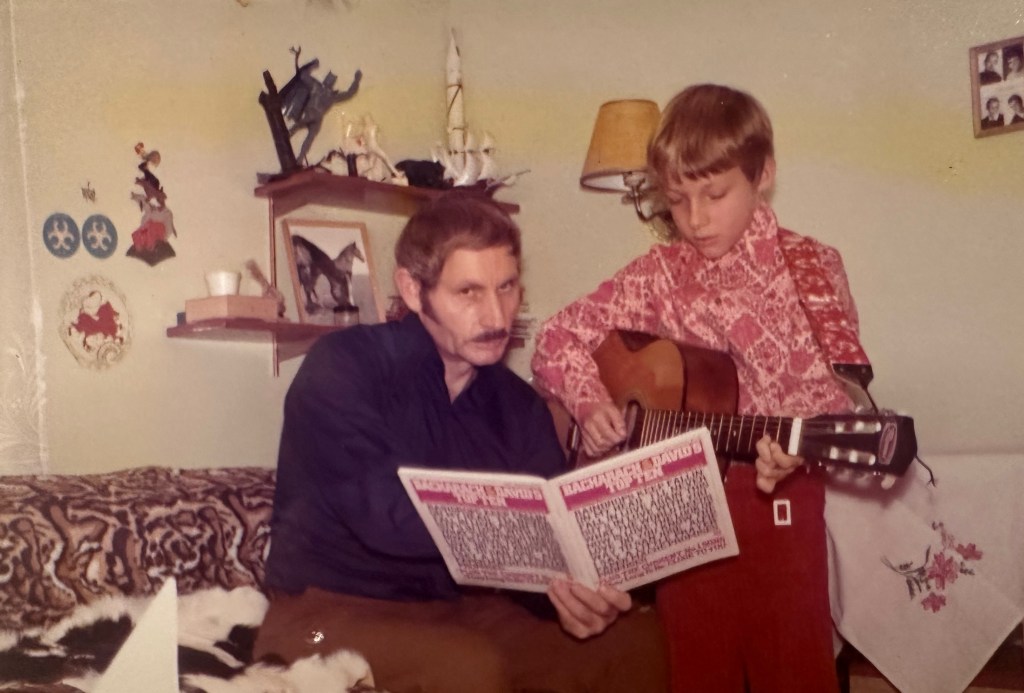
Two years later, I got a new guitar (the same that Ethan learned to play guitar on at the same age). The pink pant suit was made by Oma.
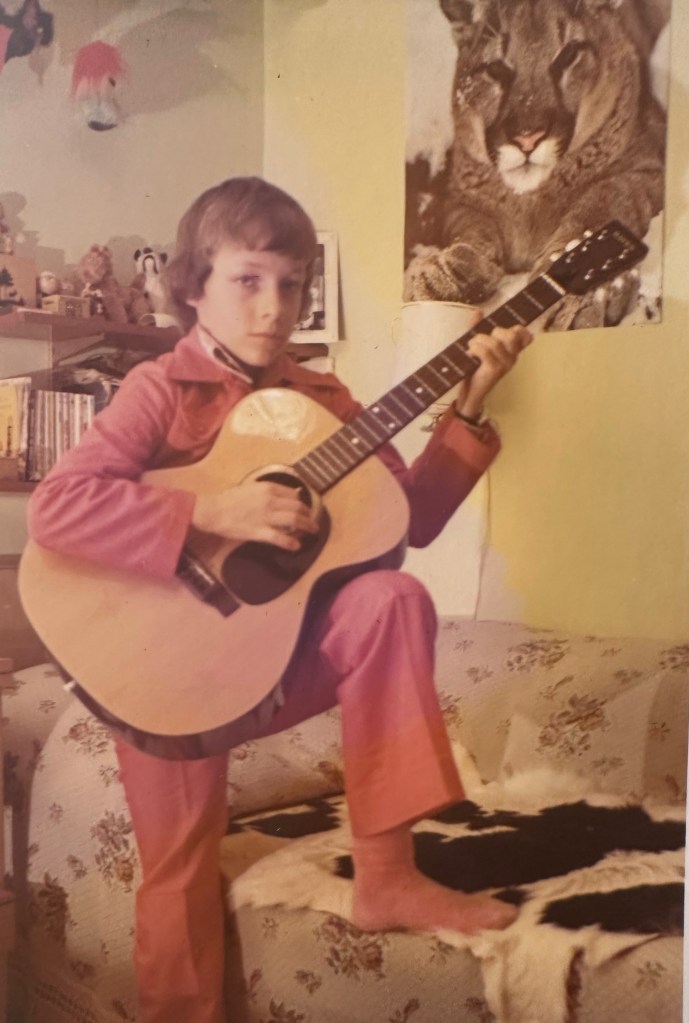
My grade three teacher was not a guitar player, so was limited in what she could teach me. Oma was then on a mission to find a guitar teacher who would teach me to play music from sheet music, instead of folk guitar. She was going for a walk in the neighborhood and saw a young man practicing piano at home, and knocked on the door. She asked him where her was studying, and he recommended a local music studio where he taught. Ironically, that pianist turned out to be my music teacher at Carson Graham in grades 11 and 12, Peter Taylor.
I studied at Bob Dressler’s Music Studio through grade eight, learning to read from sheet music. Oma was so proud, although she did have to tell me to practice.
While in grade seven, we signed up for our grade eight classes. I signed up for music classes at Hamilton Junior High, mainly because my best friend at the time did so as well. The class, Beginning Band, was to begin in the January term. One of my other friends from elementary school had signed up for Automotive Mechanics for the fall, and suggested that I should drop band and take automotive instead for the spring term. I thought this was a good idea. When I spoke to the band teacher in grade eight about wanting to drop the Beginning Band class, he asked me why I had signed up – there must have been a reason for me wanting to take band. When I told him I played guitar, he asked me to play for him, which I did. He immediately put me into the Guitar Ensemble, which consisted of guitarists who were much older and better than me, as well as the Jazz Combo, made up of the school’s best musicians. The latter was clearly an effort to get me excited about playing music, and it worked.
I have a clear memory of playing guitar in the band in the fall of grade nine, and music suddenly making sense to me. It was no longer a chore, and it seemed to suggest a future. I decided then, in grade nine, that I wanted to pursue music as a career.
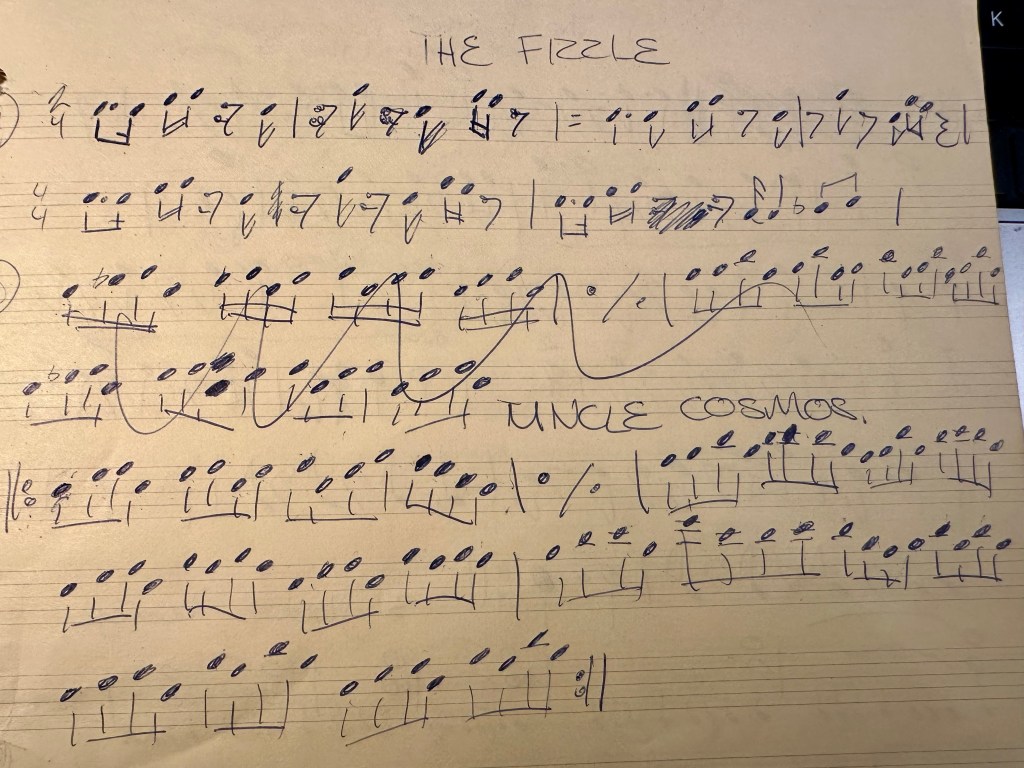
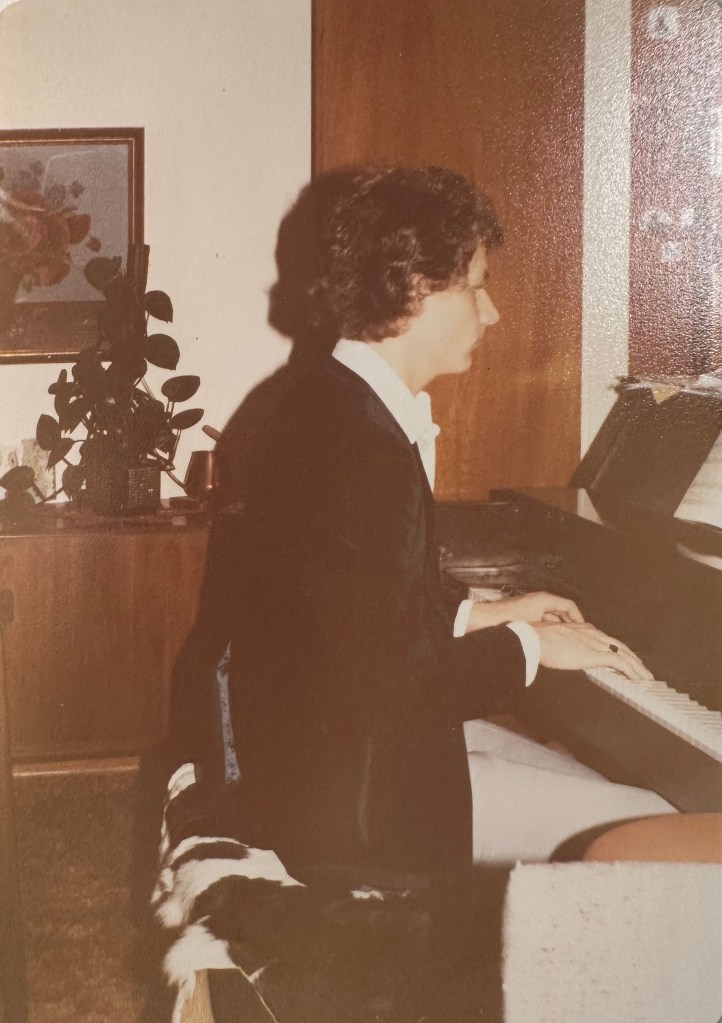
Oma initially supported my desire to concentrate on music (as long as my grades in school did not drop, which they didn’t). At 14, I began piano lessons, initially studying with a nun at a local convent. Oma drove me to piano lessons as well as guitar lessons at the time.
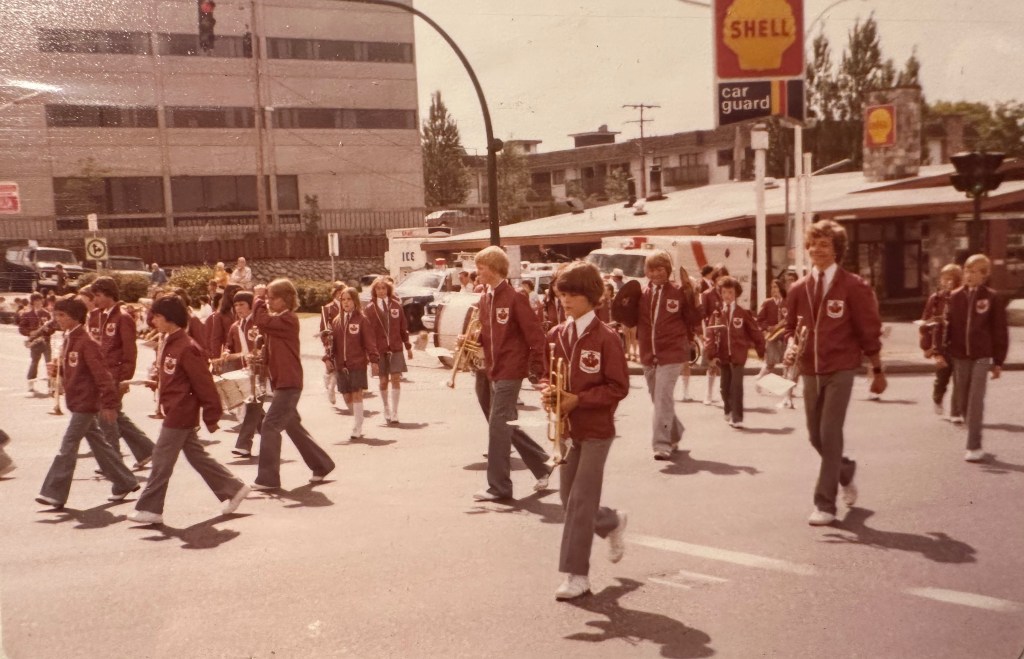
In grade nine, I joined the North Vancouver Youth Band, and took up trumpet and quickly moved up from the Junior band (made up of kids five years younger than me) to the Intermediate band (made up of kids three years younger than me). By grade 10, I was in the Senior band, and we made a trip to the Calgary Stampede in 1978, and to England in 1979.
I went to a Junior High School, Hamilton, in grades 8-10, and then a Senior High, Carson Graham, in grades 11 & 12. Hamilton had an excellent music program – in grade eight, the teacher who convinced me to stay in band, led the Hamilton Stage Band (basically a big jazz band) to the Canadian Stage Band Championships, which they won (although I wasn’t in that band); in grade nine, we had a new band teacher, and we also won this competition, in which I played guitar (and was a featured soloist).
Grade ten was a forgettable year; we had a another new music teacher for the fall who was fired at Christmas time (for reasons not shared, but probably because he gave me and my music buddies his keys to the school and we tried to have them copied). We got a music teacher in January who had just graduated from UBC, and knew nothing about jazz. Our previous three teachers had fostered my interest in jazz, so I had little respect for the new teacher. Coupled with over-confidence in my own abilities and a general disdain for authority shown by most 15 year olds, I acted out quite a bit and became an obnoxious and rebellious student. One evening concert where the school band was to play at an elementary school, me and my music buddies showed up out of uniform (but wearing rock ‘n’ roll clothes), with cigarettes on our lips. Oma was summoned to the principal’s office the next day, and I was almost suspended.
One of my music buddies ended up becoming a full-fledged rock musician (after dropping out of school after grade ten); the other became a priest. Huh.
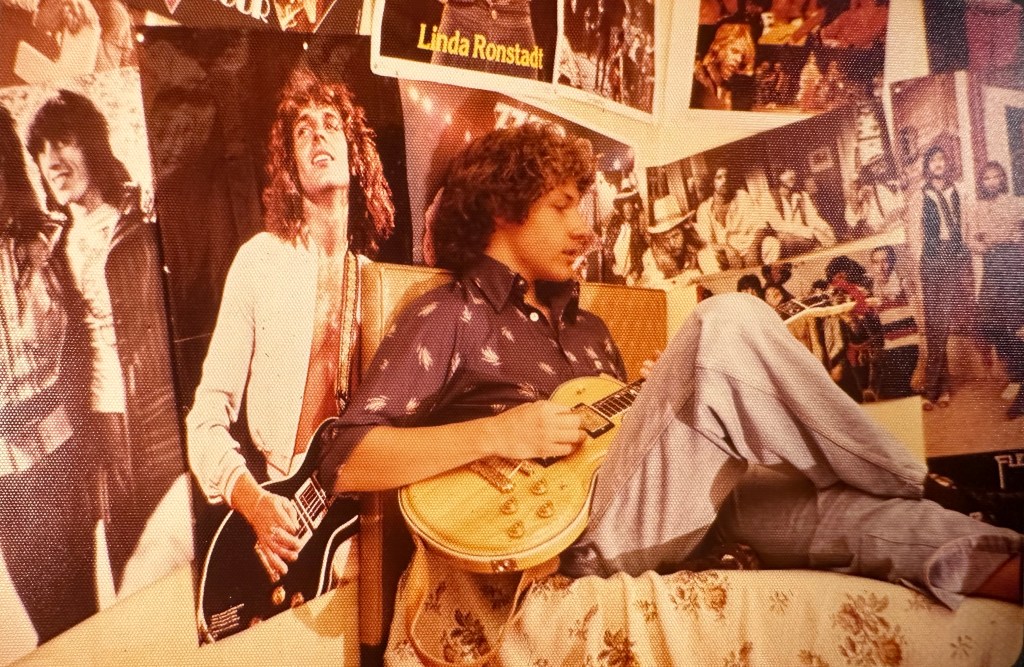
Carson Graham had a distinguished music program, and had the luxury of two music teachers. These teachers were quite strategic; although they recognised that I was a very good guitarist, that instrument was of limited use for the multiple ensembles in the school. Therefore, they convinced me to take up the bass guitar in grade eleven. In May of that year, I was hired for my first professional gig; seeing the potential need for bass players, I began to concentrate on bass.
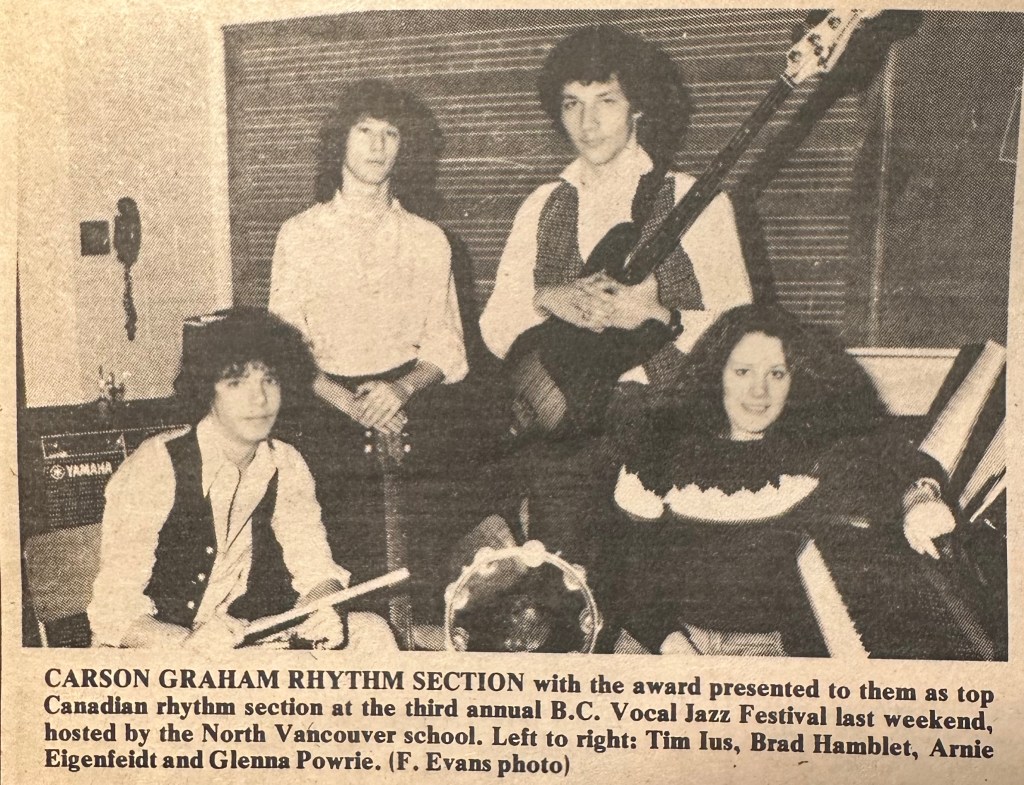
Grade 12 was a special year – the two music teachers went out of their way to support my musical growth. One teacher created a special course for me that allowed me to spend the class time writing music for the school’s ensembles; the other teacher contacted the leader of the UBC Jazz band and got me an audition to play with university musicians. I graduated with many awards, and things looked bright for a musical career.
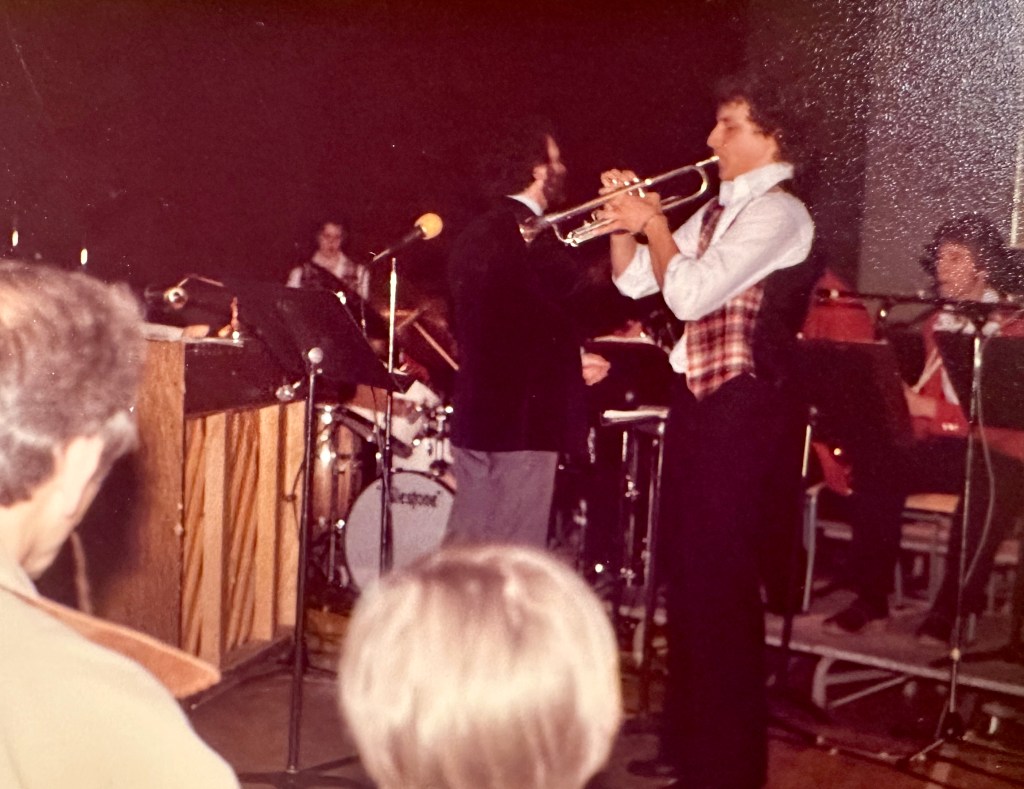
Opa was happy to support my desire to pursue music – he said that he had worked his whole life at a job he didn’t like, and the greatest thing he could imagine would be to have a job that he loved. Oma was completely against it. She insisted that I should have a “real job”, like teacher or lawyer, and that I could play music on the side.
After high school, I went to Vancouver Community College to study jazz. I would not have been accepted at UBC, since I had not taken Algebra 11 – this was actually a strategic decision, because UBC did not have a jazz program (which was my goal at the time). I began to study the double bass and played in various orchestras; the dream was to play in an orchestra “during the day”, and in jazz bands “at night”.
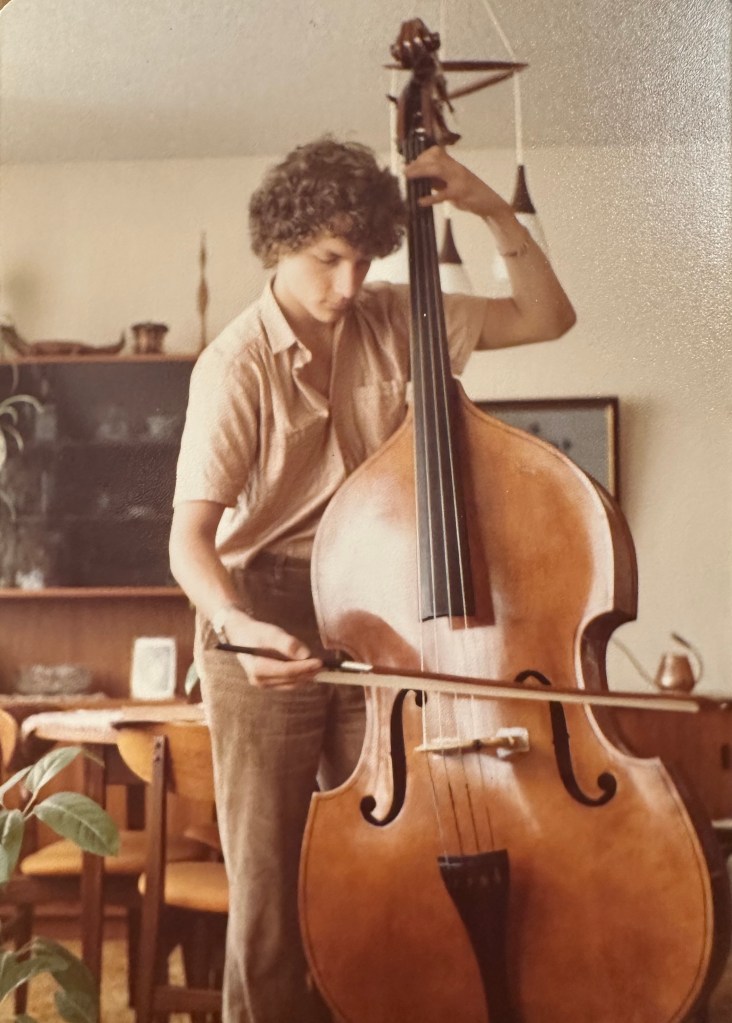
I had worked the summer after high school at London Drugs so that I could buy my own car. When I had enough money (about $1000) to purchase an older used car, Oma and Opa bought me a much nicer two-year old car for $3500, and told me to save my money. Using that saved money, and combining it with money I made playing gigs during first year college, I was able to buy a double bass.
I continued to play professionally in what were called “casual” bands – I would get a phone call to show up at, for example, the Hotel Vancouver for the next Saturday, and play from 9 pm to 1 am. We would play from a “book”, which was a collection of written down music that we would play on sight, and thus not require rehearsals. I played these gigs almost every weekend, earning $100 a night, from 1980 through until 1985. When I came home from a gig at 1:30 or 2 am, there was always a sandwich and glass of milk waiting for me – thanks, Oma.
Some of the bands were a bit more organised and regular. I played regularly with the band below for corporate gigs (back when corporations had parties for their employees).
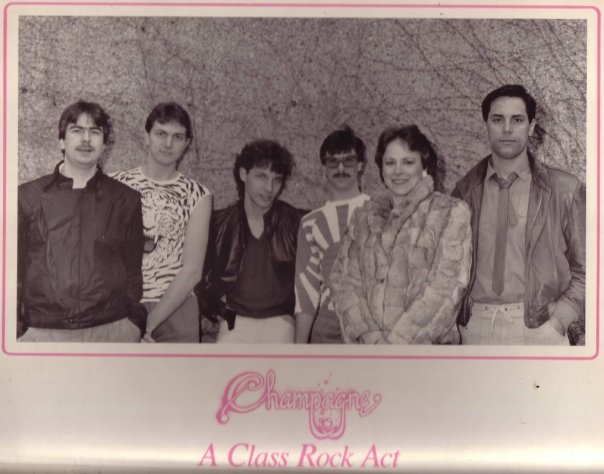
My playing career culminated with getting hired to play six nights at a nightclub, Mings; I got paid $1000 a month, which was unbelievable (considering that I was still living at home at the time). We played from 9:30 until 2 am, and were always fed after in the restaurant downstairs. I would get home many nights at 4 or 5 am; I was a true musician.
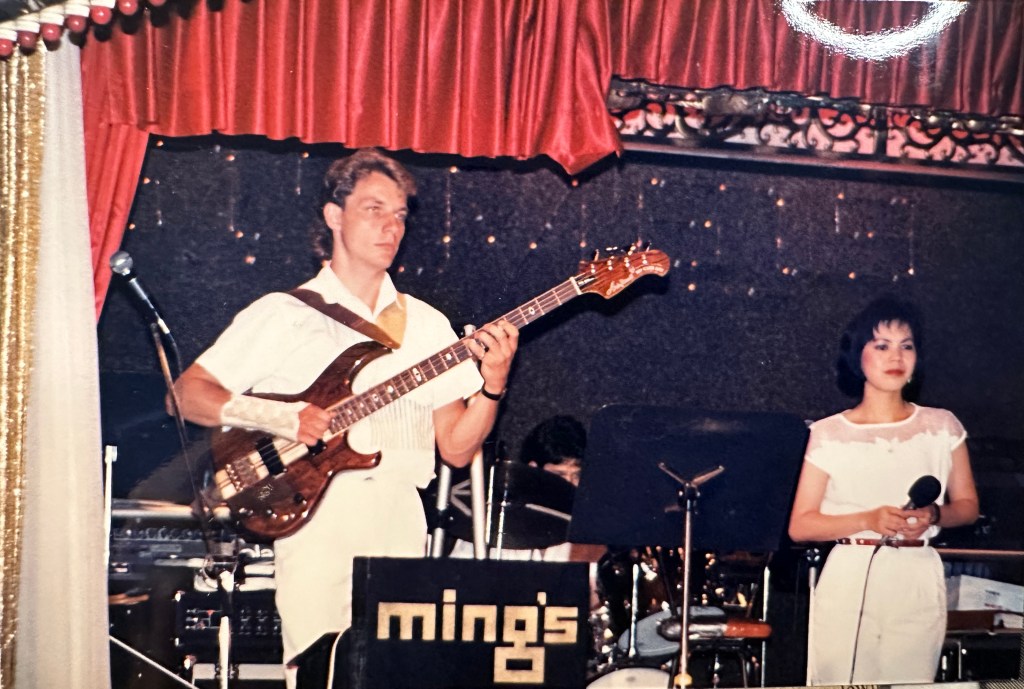
By the mid-1980s, I had decided to concentrate on composition rather than performing; getting tendonitis at Ming’s (see photo above) solidified this decision, as my bass career was pretty much over.
I graduated in 1985 from UBC with a Bachelor of Music in Composition, and immediately began a Master’s Degree at SFU in Computer music. I received a whopping $14,000 in scholarships for my first year.
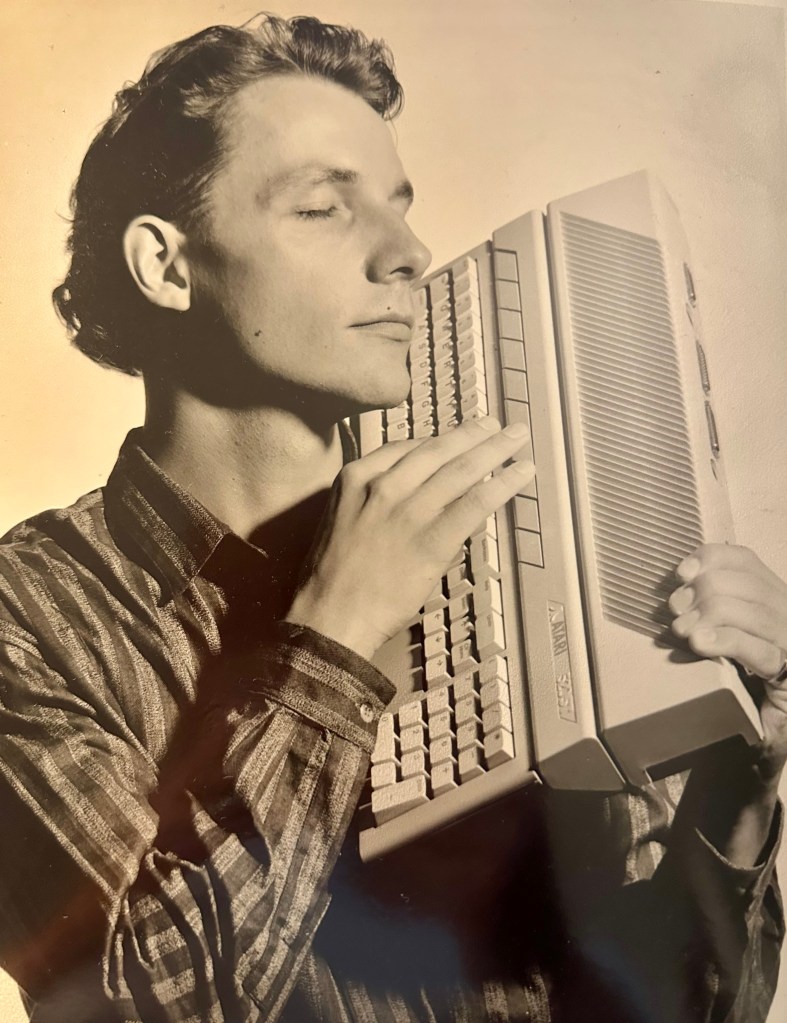
Because I was on a path towards becoming a professor, Oma had become very supportive of my career. Oma and Opa came to almost all my shows and performances.
In 1986, Opa and I rebuilt the garage at 233 W. Keith into a recording studio. My two musical collaborators and I paid $100 a month rent, and we formed “Sayvon Sound”; we placed an ad in the Yellow Pages telephone directory (the only way to get business back then), and hired ourselves out as a recording studio. We pooled all of our equipment at the time, and had quite a nice setup. Lots of good music was recorded there, and when I returned from Chicago in the 90s, I used it to record all of my music for dance companies. Thanks, Opa.
Regular visits from Tante Lolly
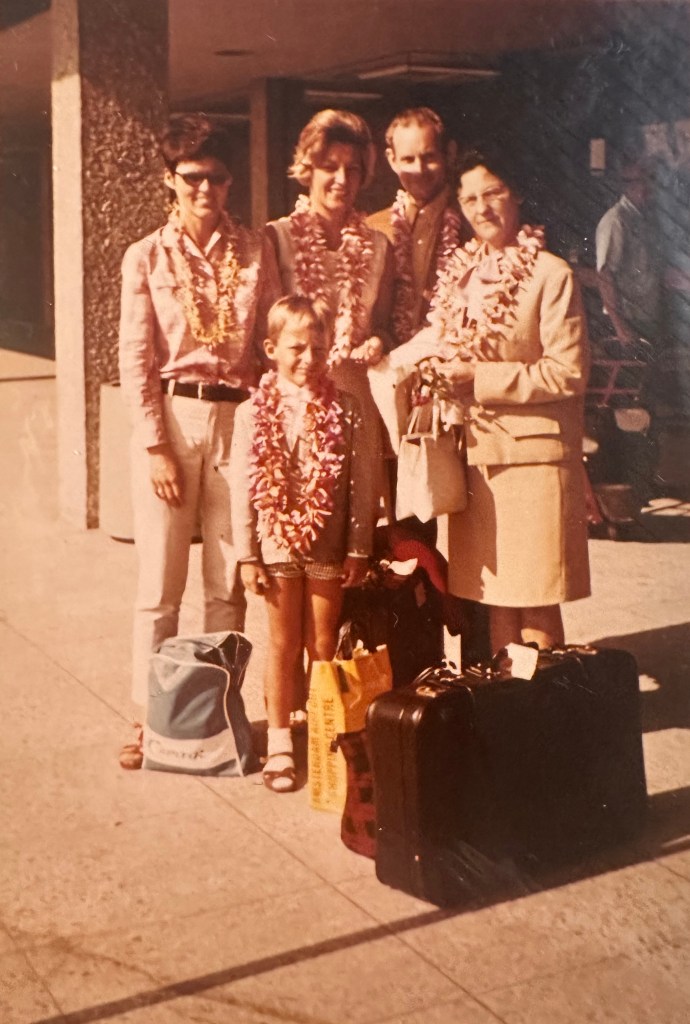
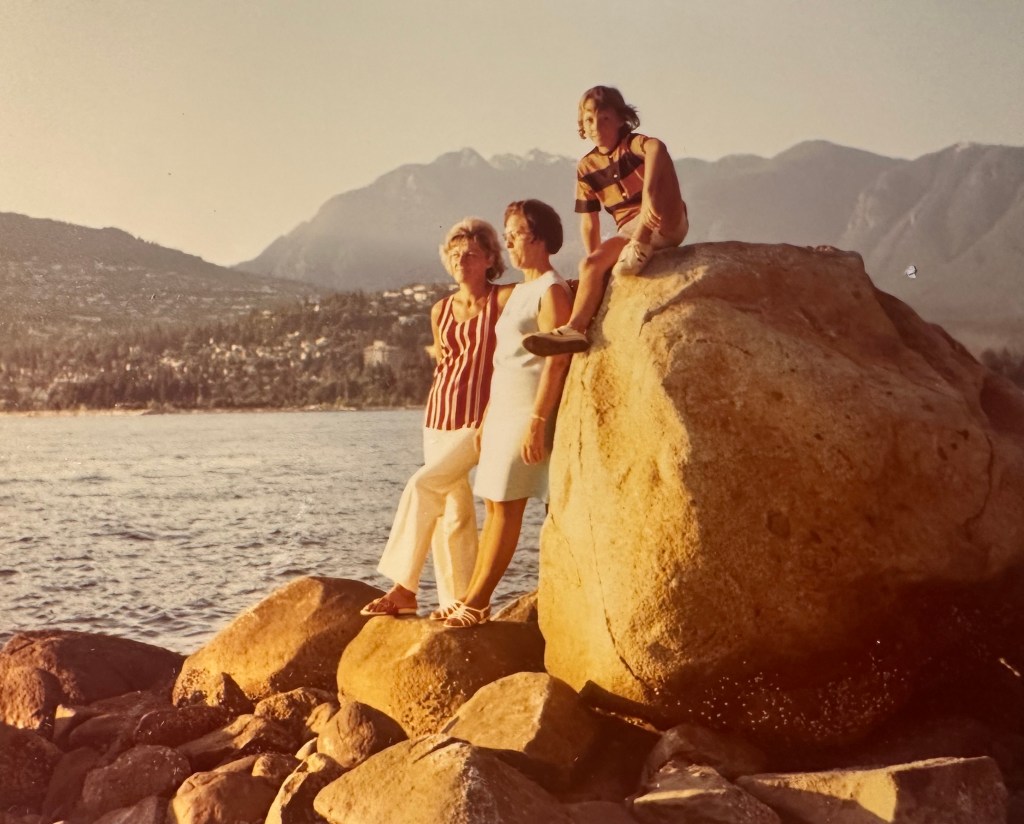
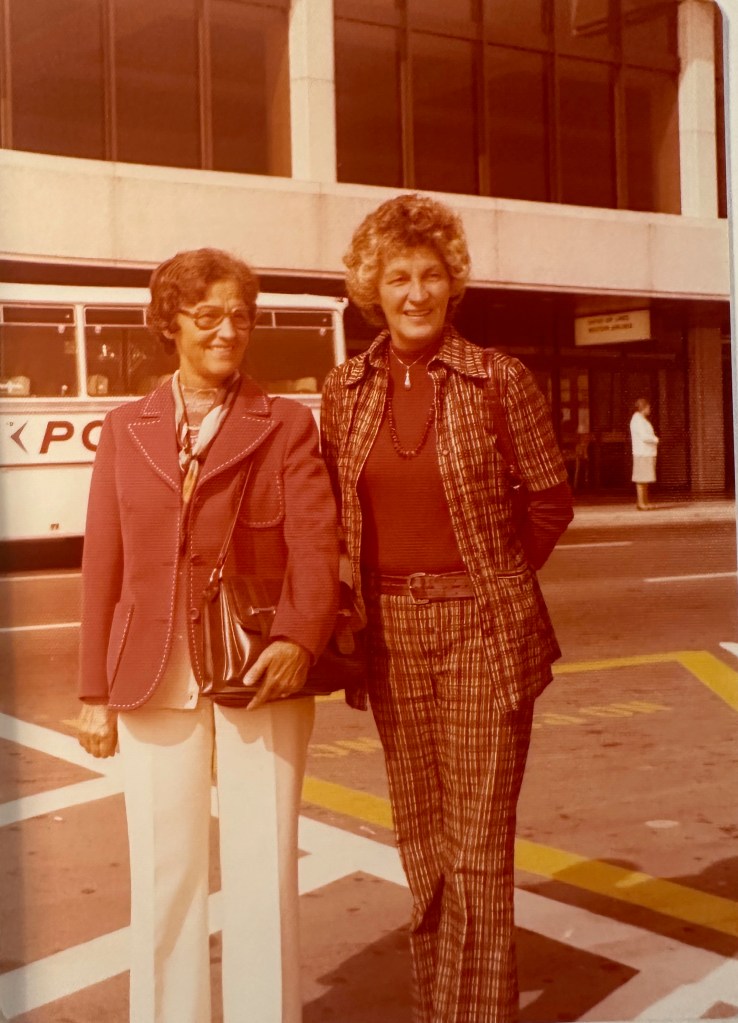
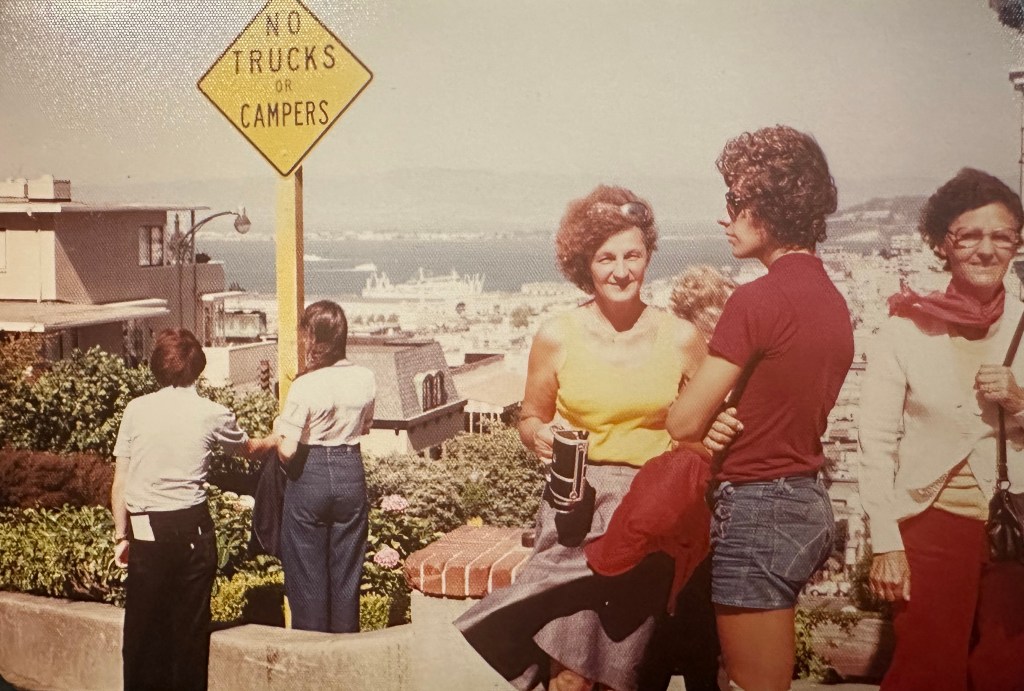
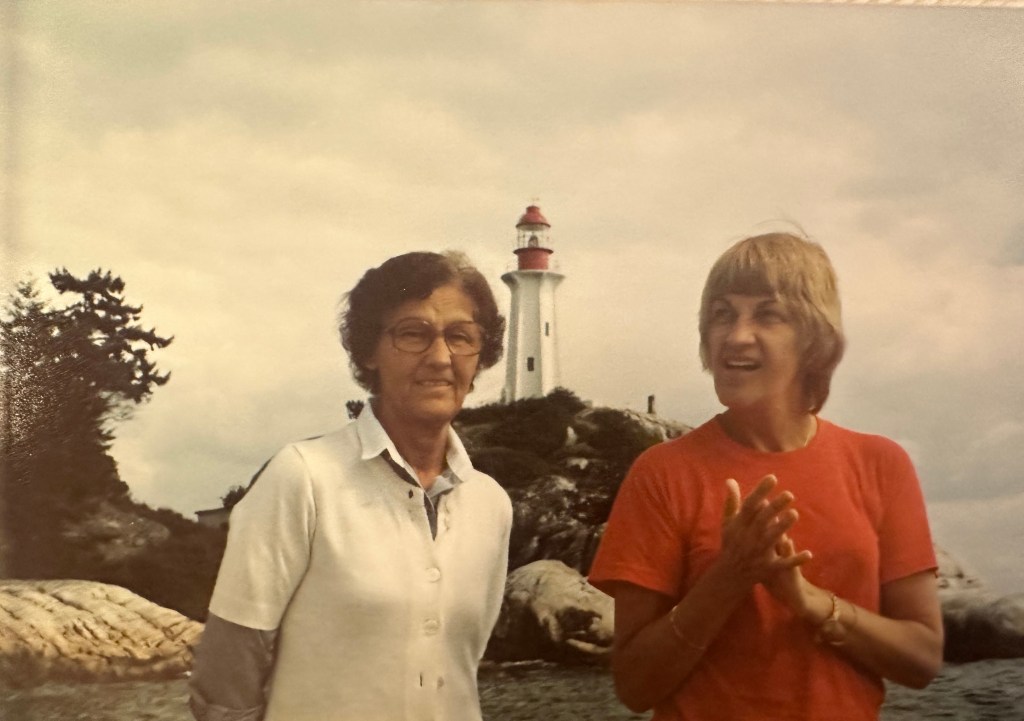
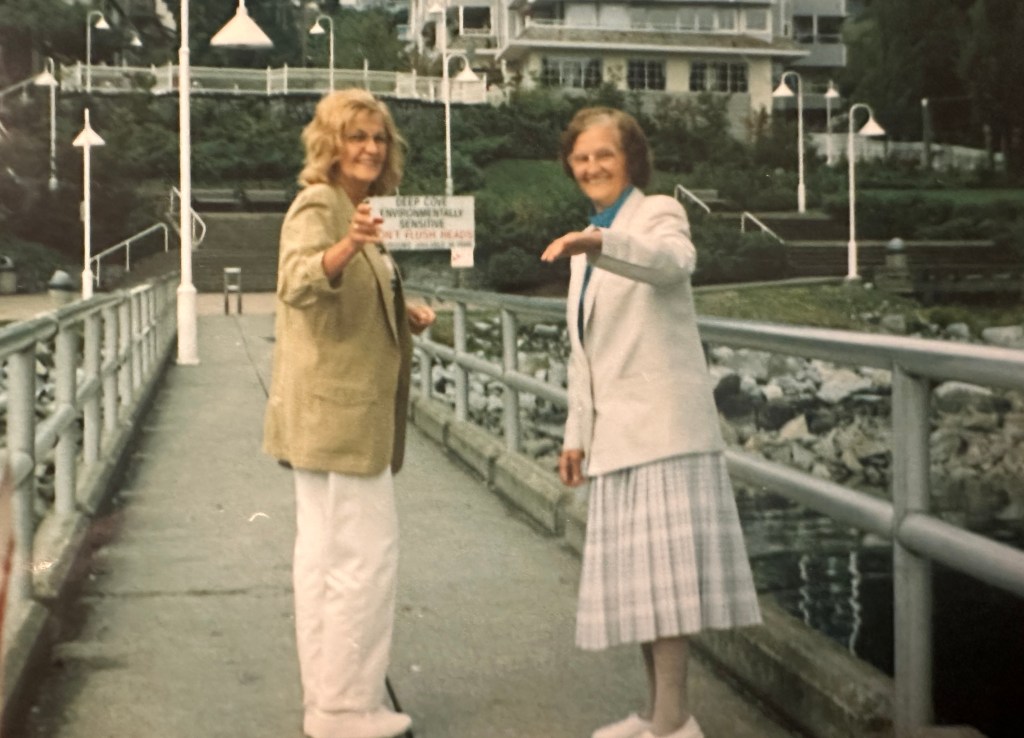
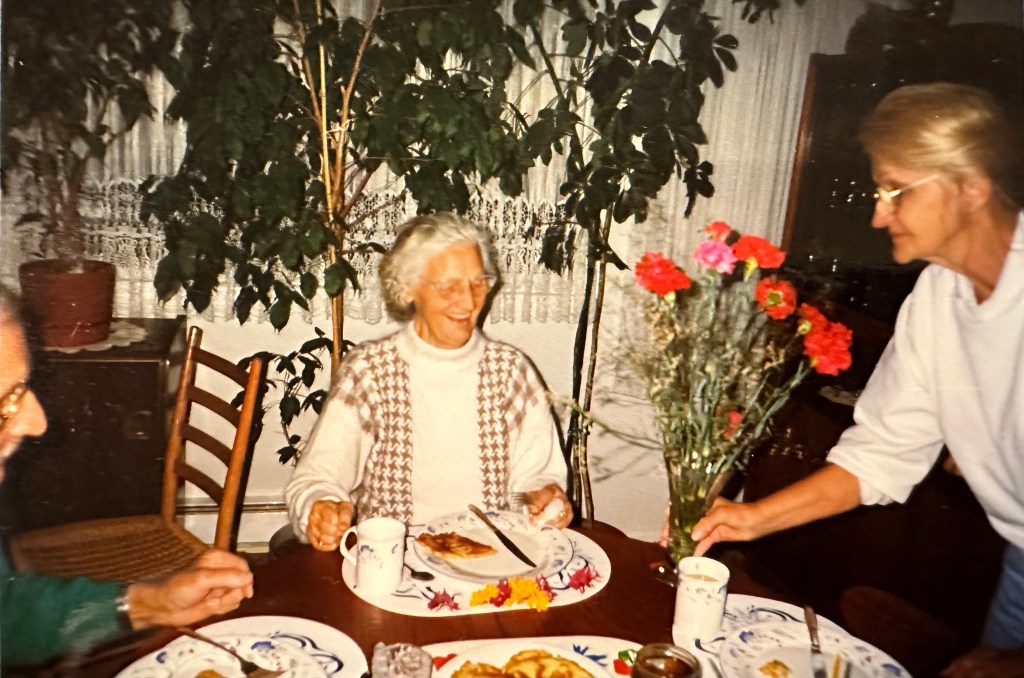
Elly’s sister, Charlotte, or Tante Lolly as I called her, came to visit us regularly every few years since 1969. The photos are a lovely reflection on the fashions of the time.
Visiting Germany 1986
I spent seven weeks in Europe in 1986, three of which were to attend the music classes at the Darmstadt Summer courses. I purchased a Eurorail pass, which allowed me to travel anywhere in Europe for one month, for free. I traveled to Paris, Luxembourg, Germany, Austria, Switzerland, and East Germany. I also was able to spend time with my extended family.
Opa had arranged for my visits through mail and phone calls. I stayed with my cousins Klaus (in southern Germany), Wolfgang (in Hamburg), who were the sons of Opa’s sister Ula. I also stayed with my Tante Lolly, Oma’s sister Charlotte. I was not in contact with my cousin Gerda, who had left her husband and had a child with another man; my mother was outraged, and disowned her for some time.
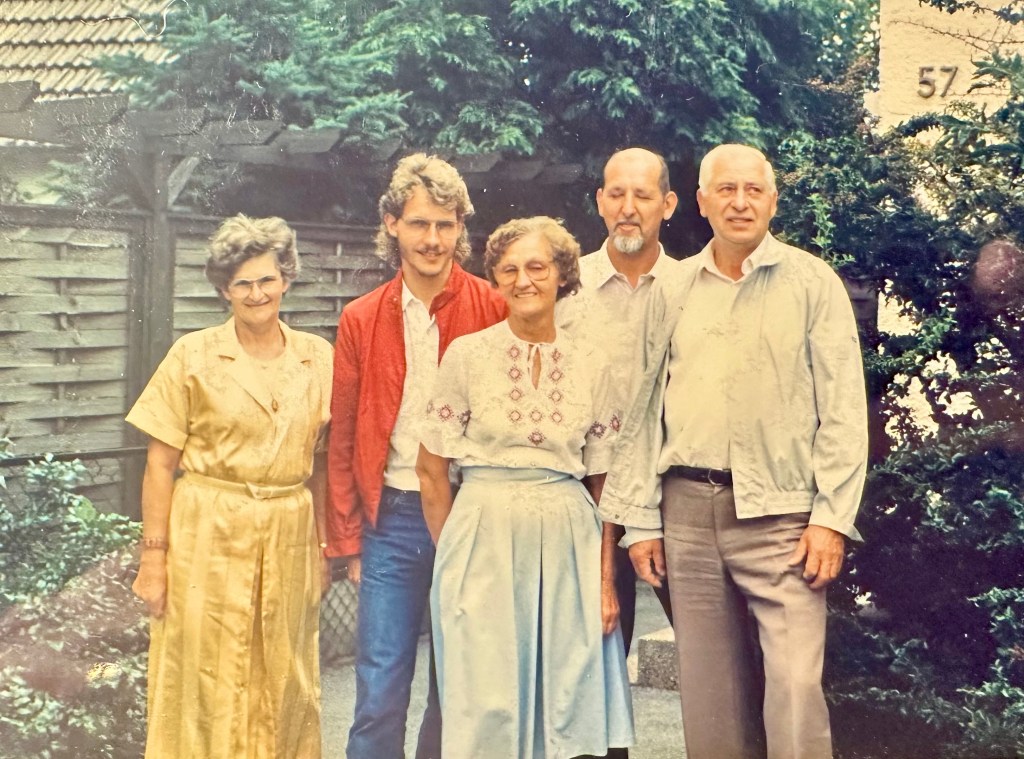
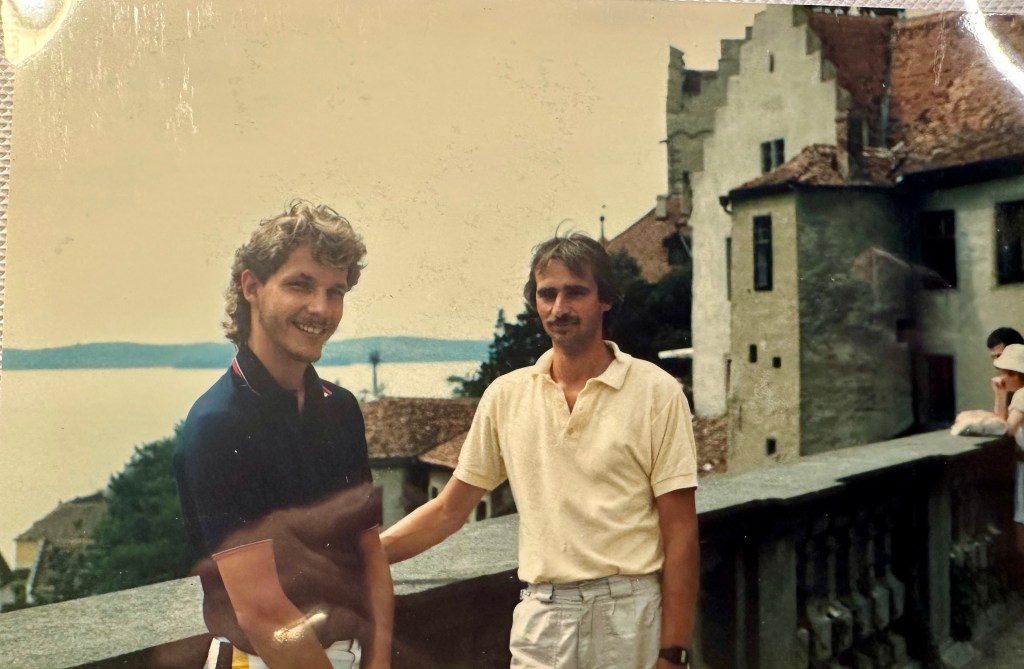
The seven weeks alone were life-altering for me – I had to survive completely on my own. I turned 24 on that trip, and distinctly remember accepting that I was then an adult. When I came home again, I bought a fridge, microwave, and small stove for my downstairs apartment, and began to live as if I was a renter (although I didn’t actually pay rent!). I learned to cook and clean and take care of myself. Your mother and I had begun to date before I left for Europe; I feel that if I didn’t level-up and begin to act like an adult, your mother would have found someone more responsible and grown-up.
Opa visits Germany 1970 & 1980
After her trip to Germany in 1969, Oma never felt the need or desire to return to Germany. In 1971, her mother passed away; she had fallen out with her older sister, Grete; her favourite niece Dora passed away from cancer in 1975; her other niece, Gerda, had left her husband to have a child out of wedlock. Oma was happy to have her sister Charlotte visit Vancouver regularly. My suspicion is that her sister was telling Oma how much Germany was changing; Oma had this idealised version of Germany in her head, and didn’t want to alter that by seeing the new Deutschland.
Opa was able to visit Germany in 1970, having been away since 1954. Two of his sisters lived in West Germany, while his father and brother lived in East Germany.
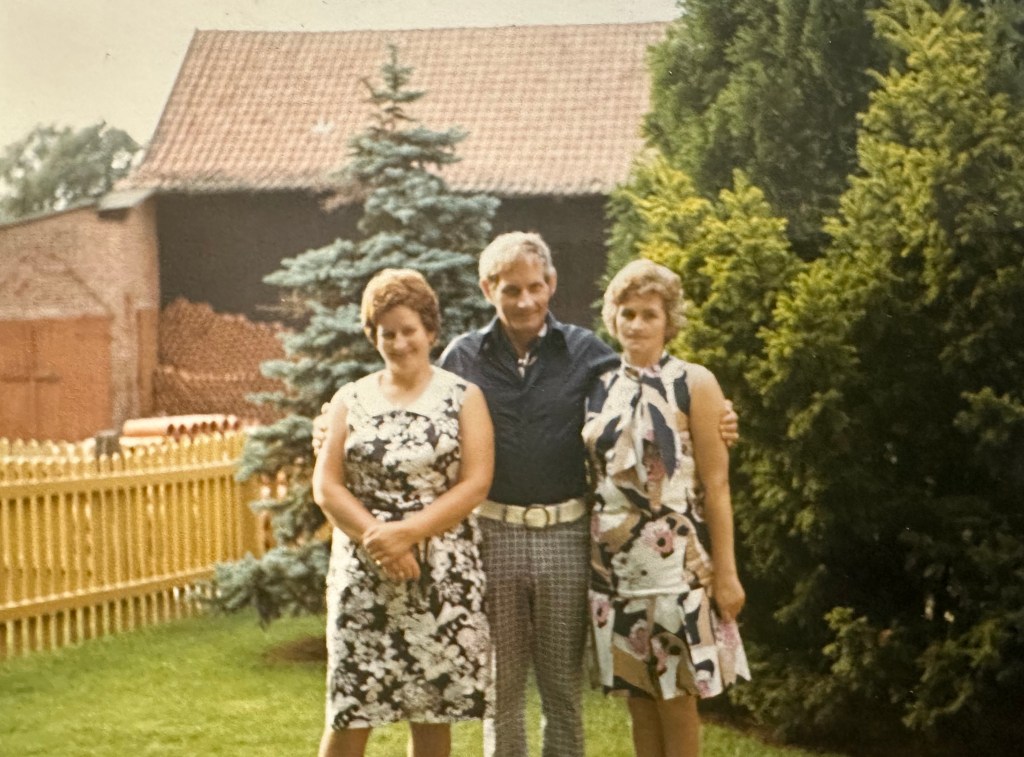
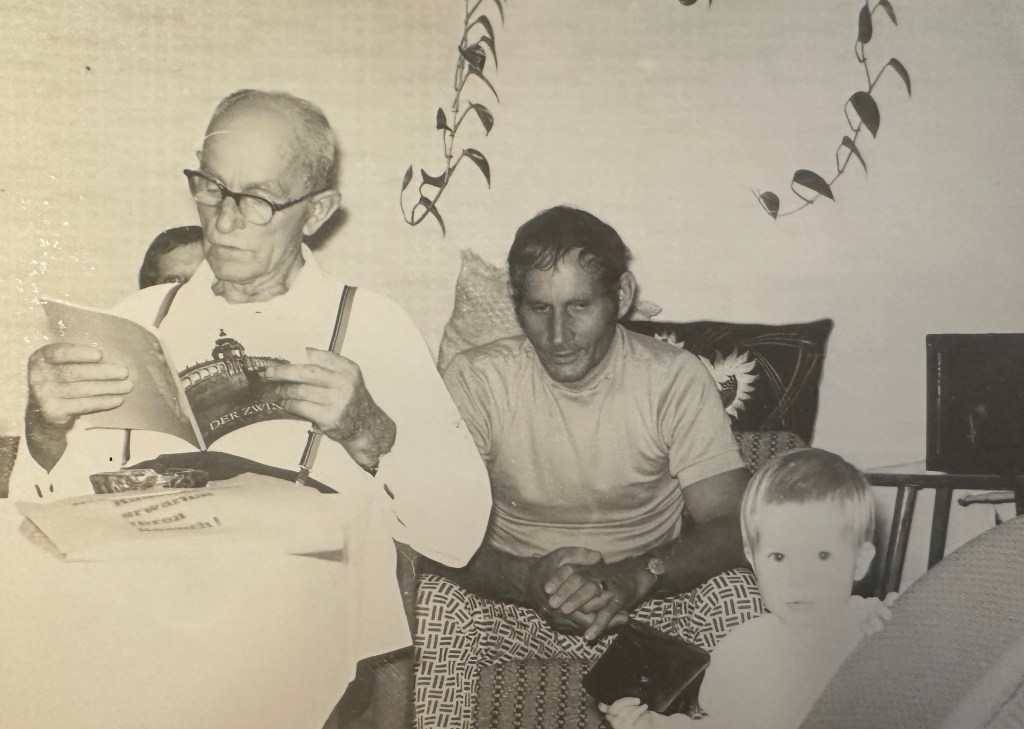
In the fall of 1980, Opa’s father turned 87, and Opa wanted to see him one last time. Opa travelled to East Germany and visited his father, Ewald, in the house he had lived in for decades.
Opa’s father passed away less than a year later in 1981. I was at home when the phone call came from his sister to let us know, and I drove to Opa’s work at Meteor Meat to tell him. Opa nodded, and said he was happy that he could see him one last time the year before.
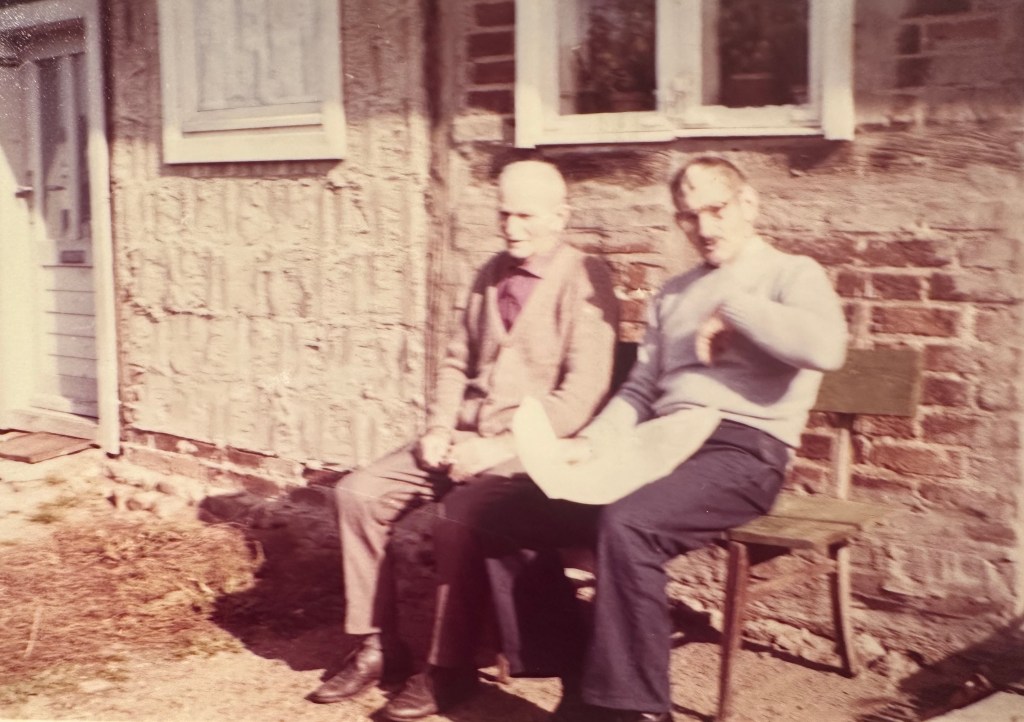
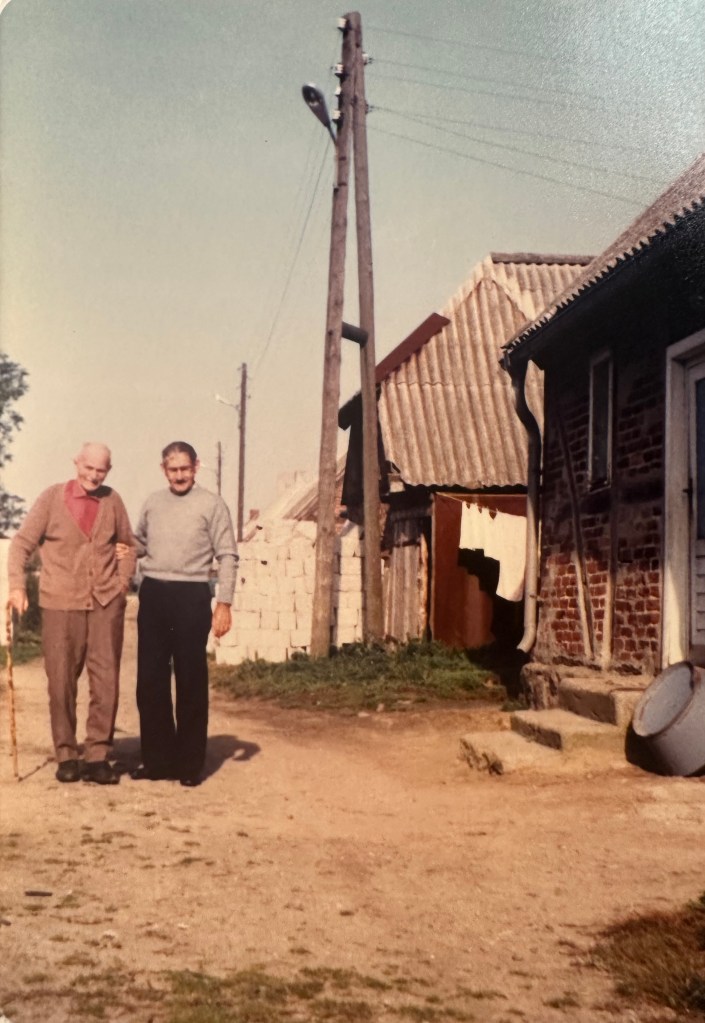
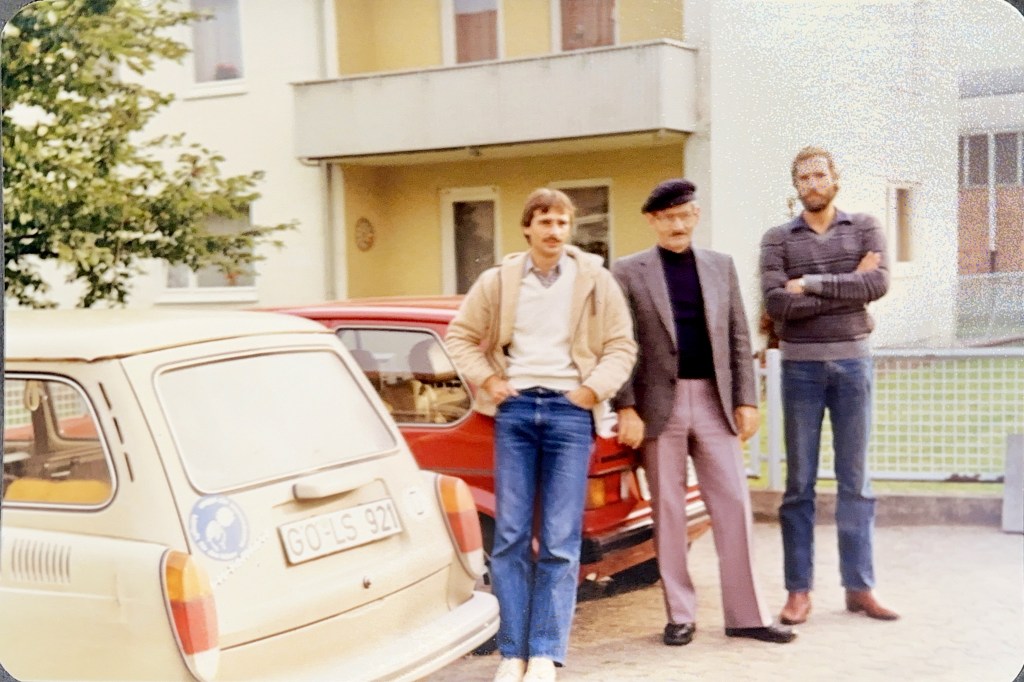
During the trip to Germany, Opa was able to connect with his nephews, the sons of his sister Ula: Wolfgang and Klaus. The two of them came to visit us in Vancouver the following year.
Moving out; Chicago bound
In 1988, I graduated with my Master’s degree from SFU, having lived at home until that time. Your mother and I had been dating since 1986, and it was clear to both Oma and Opa that it was a serious relationship. As I mentioned before, Oma was resentful that another woman could have influence over her son; one could call it over-protective, but I was in my mid-twenties at the time. At one point, Oma even talked to your mother and suggested that she should date someone else, like a lawyer or doctor, as I was destined to be a poor musician. Point of note: it was not anything specific that Oma disliked about your mother, it was the idea of a woman in my life.
I moved out in September 1988, just after my 26th birthday, to live with your mother. Oma wasn’t thrilled, but accepted it. In September 1989, I was hired for one year as a visiting Assistant Professor at the University of Victoria, and lived in Victoria for eight months. After that, I had been accepted to begin my Doctorate at Northwestern University in Chicago, to begin in September 1990.
Your mother and I were married in May of 1990, and moved to Chicago in August of that year. We drove a small UHaul rental truck with our belongings; Oma and Opa drove with us as far as Seattle to see us off.
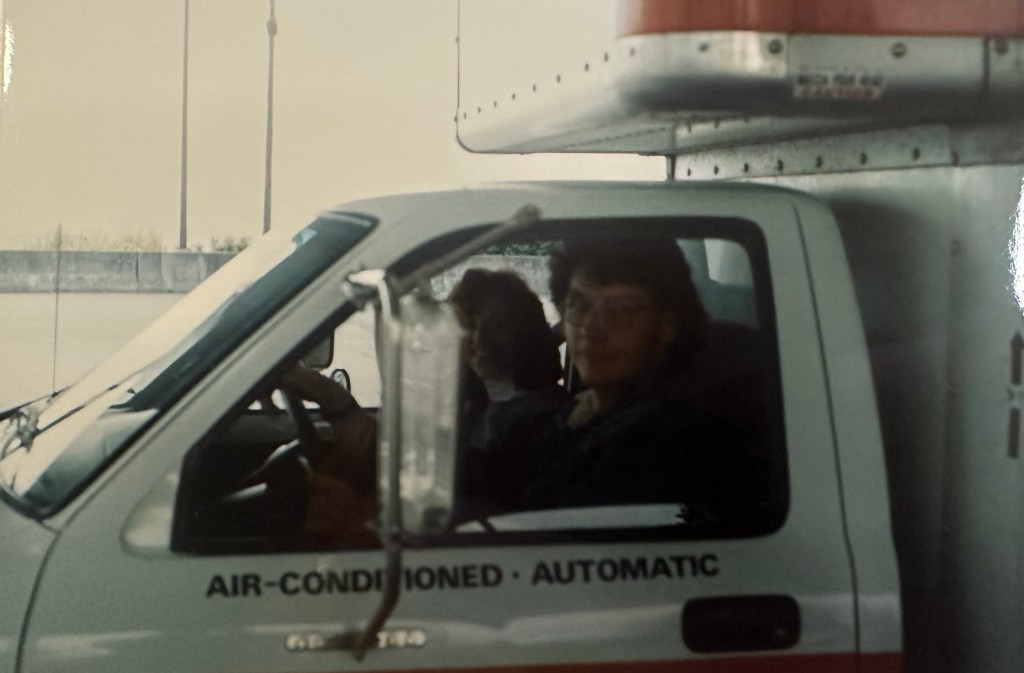
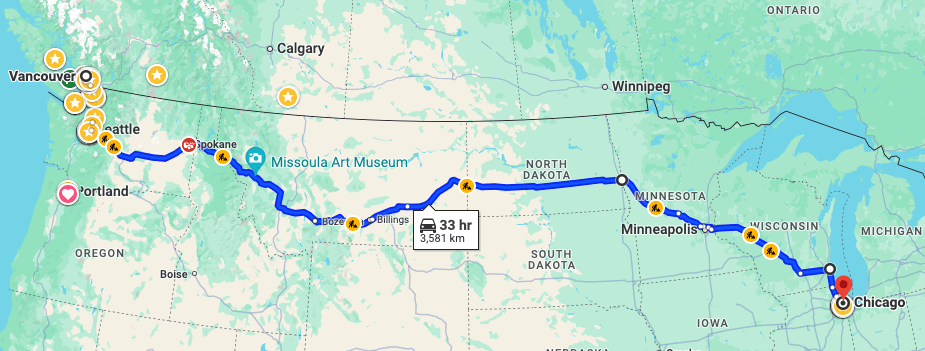
While in Chicago, we would receive monthly care packages from Oma and Opa, consisting of a big wheel of Camembert cheese and home-made cookies or sweet-bread. We flew back to Vancouver each Christmas and summer, which Oma and Opa paid for almost every time; the one time that your grandfather paid, he never let us forget that he paid for those plane tickets.
It was in the trip of August in 1993 that we announced we would be returning to Vancouver. We were all sitting in a restaurant in Seattle – we always flew into Seattle because it was cheaper, and Oma and Opa would pick us up – and we outlined the reasons why it made sense to return to Canada. Our final line was that we wanted our son to be close to his grandparents – it took a few seconds for that to sink in; Oma and Opa were overjoyed.
 Our German Family