Oma: 1945-1947. Surviving a World War
By the fall of 1944, it was clear that Germany would lose the war. The Soviet Red Army was advancing toward East Prussia in October, and the German government planned to evacuate as many people as possible by sea in Operation Hannibal.
Oma’s family left Wiepenheide on January 20, 1945: Oma (17), her parents, her sister Charlotte and their three children: Helmut (6), Dora (5), and Gerda (4).
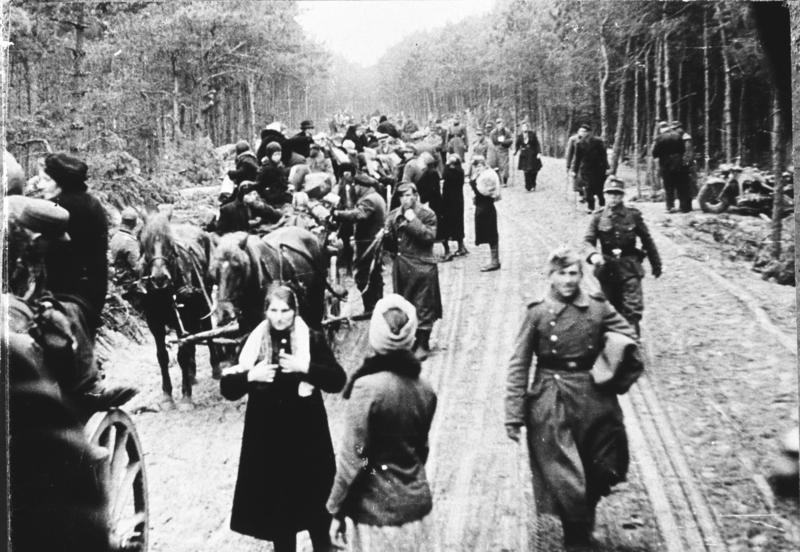
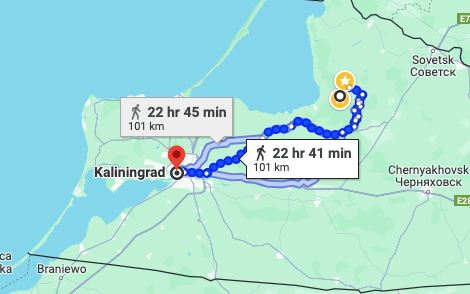
They put as many belongings as possible on a sled and began the 100 km to Königsberg (now Kaliningrad).
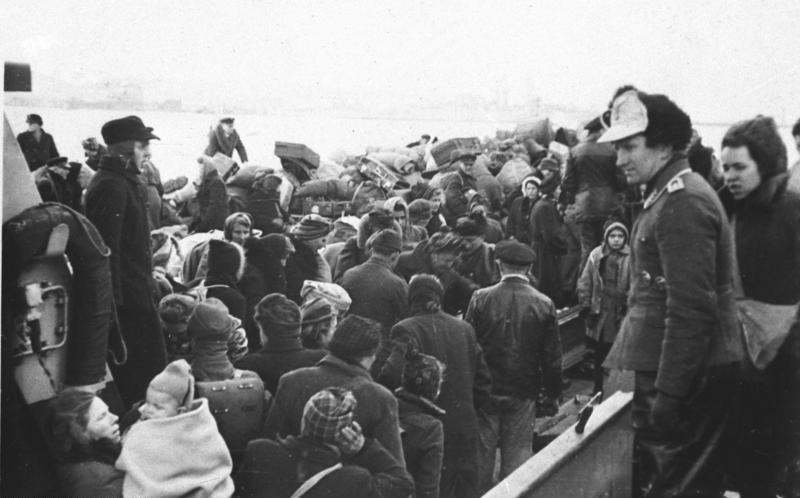
In Königsberg, they were to sail on the Wilhelm Gustloff, which already was overcrowded.
Gerda says that Oma got Diphtheria on the road to Königsberg, and had to go into the hospital when they got there. As a result, the family could not board the Gustloff.
The Gustloff left Pillau (a port very close to Königsberg) on January 30, 1945, with 10,000 people aboard, mainly refugees; it was sunk by a Soviet submarine, and 9,400 people died, “making it the largest loss of life in a single ship sinking in history” (Wikipedia). Compare this to the 1,500 people that died when the Titanic sunk in 1912.
Oma and her family eventually sailed on the M.S. Mars to Frederikshavn in Denmark.
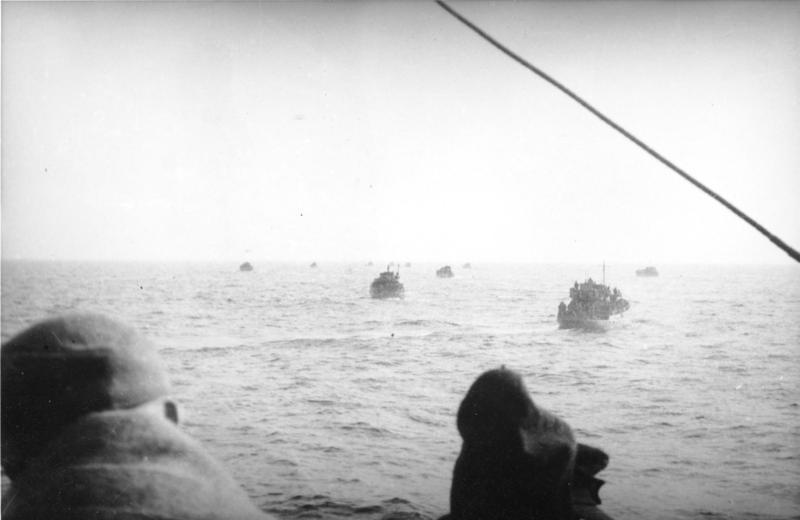
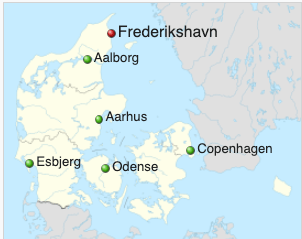
They stayed in a refugee camp there for a week, then were transferred to Skagen, the northernmost tip of Denmark. They stayed in that refugee camp until 1947.
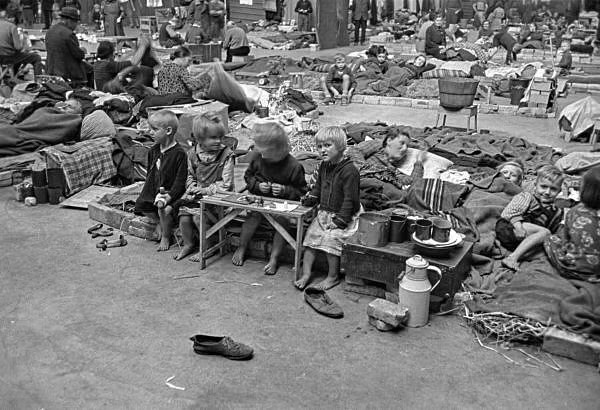
Denmark, still occupied by the Nazis in February 1945, was forced to take German refugees, mainly old people, women, and children from West and East Prussia.
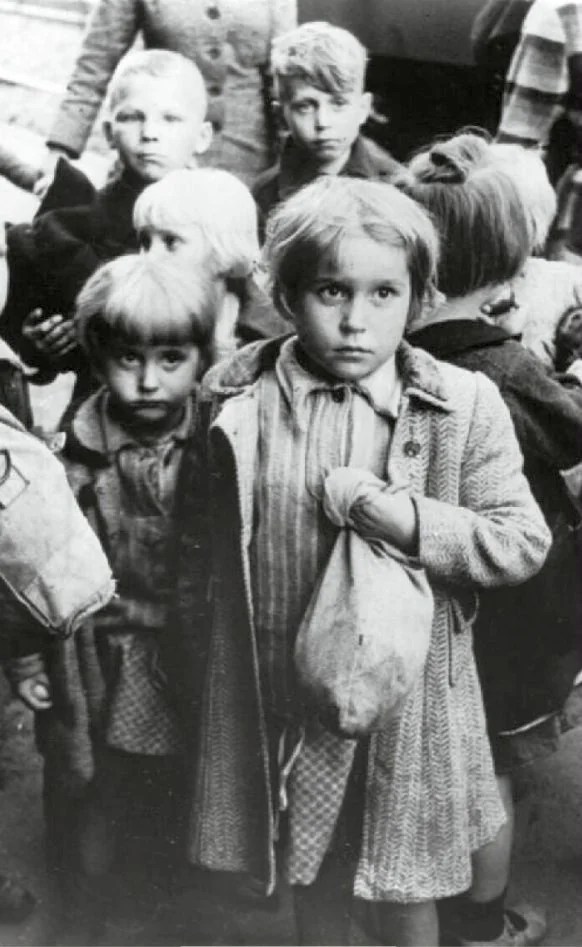
In the refugee camp, Oma’s sister worked in the cafeteria, so they always had something to eat: sausage, cheese, and butter. They mainly ate Barley soup. Oma and her mother were able to get old army uniforms, and they sewed clothes for the family. Her father, a cobbler before the war, turned old army boots into shoes.
On April 30, 1945, Hitler committed suicide, and the German armies began to surrender in May. This left over 250,000 German refugees in Denmark. The Danish government feared that the refugees – 5% of the total population at the time – could become minority population, so they gathered them all into large repurposed military camps.
After the war ended, many of the German refugees did not receive proper medical care, as the Danish Medical Association recommended not treating the Germans (reference).
It is a wonder that Oma survived her Diphtheria.
The German refugees wanted to leave Denmark, and the Danish wanted them to leave, but many, like Oma’s family, came from regions of the former Germany that was no longer German. As a result, complex negotiations began to repatriate them to areas of Germany which would later became West Germany.
In 1947, they were sent by train to Hamburg. They were transferred to an old army bunker, where most of their belongings were stolen.
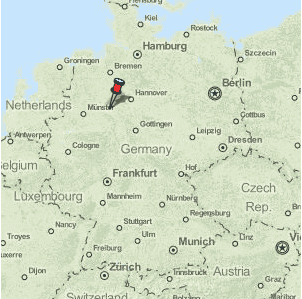
They eventually were able to go to Bünde, where Oma’s aunt – her mother’s sister – lived.
 Our German Family